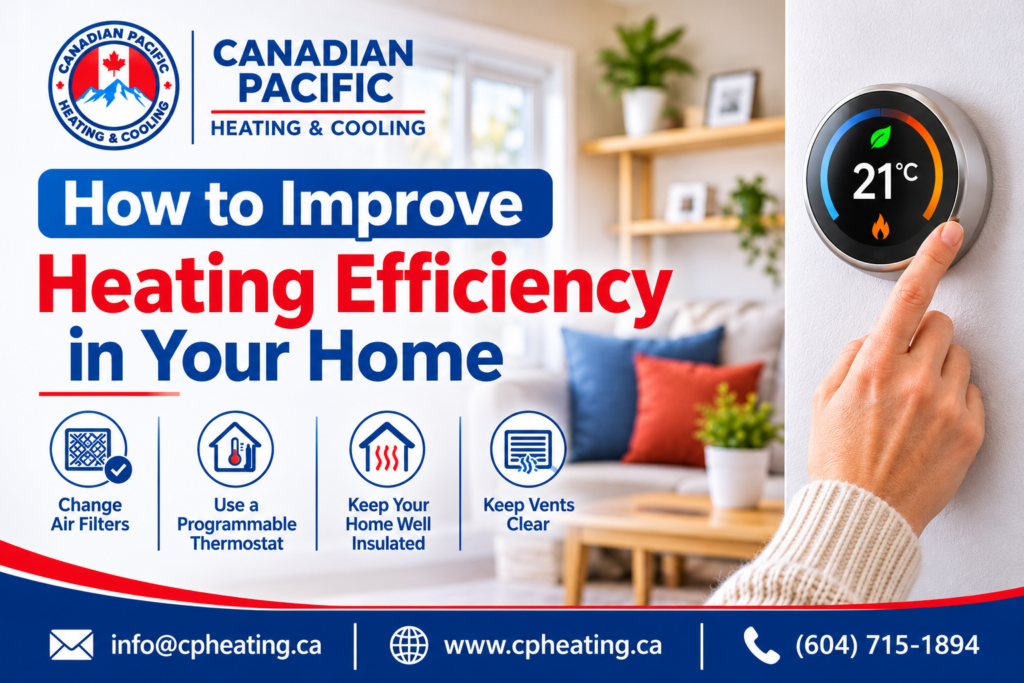
How to Improve Heating Efficiency in Your Home
If your home takes longer to warm up, certain rooms stay cold, or your heating bills seem higher than expected, there may be several factors affecting your home’s heating efficiency. The solution is not always replacing the furnace. Simple changes to thermostat settings, airflow, HVAC maintenance, and heat loss can all influence how effectively your home is heated.
For homeowners in Burnaby, BC, efficient heating is especially important during the cooler months. A heating system that operates properly can provide more consistent comfort while avoiding unnecessary strain caused by restricted airflow, neglected maintenance, or other performance issues.
The good news is that homeowners can take several practical steps to improve heating efficiency. Some involve simple routine checks, while others require professional HVAC assessment.
What Does Heating Efficiency Actually Mean?
Heating efficiency describes how effectively your heating system converts energy into useful heat and delivers that heat throughout your home.
However, your heating system is only one part of the equation. Even a properly maintained furnace or heat pump may struggle to keep a home comfortable if heated air is being lost through drafts, poorly sealed areas, inadequate insulation, or inefficient airflow.
Several factors can affect heating efficiency, including:
- The condition and age of your heating equipment
- Thermostat settings
- Air filter condition
- Airflow through the HVAC system
- Ductwork condition
- Home insulation
- Windows and doors
- Maintenance history
- Outdoor weather conditions
- Heating habits and household occupancy
This means that improving heating efficiency should involve looking at the entire heating system and the home around it rather than focusing on one component.
10 Practical Ways to Improve Heating Efficiency
There is no single adjustment that works for every home. Instead, start with simple measures that can improve airflow and reduce unnecessary heating demand, then investigate more complex issues if problems continue.
1. Set Your Thermostat Strategically
Your thermostat controls when your heating system operates and can have a direct effect on heating demand.
Avoid setting the thermostat significantly higher than your desired comfort temperature in an attempt to heat the home faster. A heating system does not necessarily warm a home faster simply because the thermostat is set much higher.
Instead, use reasonable temperature settings and programmable schedules where they make sense for your household. You may be able to reduce heating demand when the home is unoccupied or while household members are sleeping.
The ideal approach depends on your heating equipment, home characteristics, comfort preferences, and daily routine.
If your home struggles to maintain the thermostat setting despite normal operation, increasing the temperature further may not solve the underlying problem. Persistent comfort issues should be investigated rather than continually adjusting the thermostat.
2. Replace or Clean the Air Filter as Recommended
Your heating system needs adequate airflow to operate properly. A heavily loaded air filter can restrict airflow and may affect system performance.
Check your filter regularly and follow the manufacturer’s instructions for cleaning or replacement. The appropriate interval varies depending on the filter, equipment, household conditions, and amount of system use.
Homes with pets, renovation dust, or higher levels of airborne particles may require more frequent attention.
When replacing a filter, make sure the replacement is compatible with the HVAC system. Installing a filter with characteristics that are not appropriate for the equipment can create airflow problems rather than solve them.
A filter is also only one possible source of restricted airflow. If your home remains uncomfortable after replacing the filter, the problem may involve vents, return air, ductwork, or the heating equipment itself.
3. Keep Supply Vents and Return Air Grilles Clear
Your HVAC system needs a clear path for heated air to enter rooms and for air to return to the equipment.
Check accessible supply registers and return grilles around your home. Keep them free from furniture, curtains, boxes, rugs, and other obstructions.
Pay particular attention to return-air grilles because blocking the return side of the system can affect overall airflow.
Avoid closing large numbers of supply vents in an attempt to force more heat into other rooms. Your HVAC system is designed to operate with a particular airflow pattern, and changing that balance can create additional problems.
If some rooms remain consistently colder than others even when vents are clear, the issue may involve duct distribution, insulation, windows, thermostat location, or equipment performance.
4. Schedule Regular HVAC Maintenance
Routine HVAC maintenance is an important part of keeping a heating system operating as intended.
During professional maintenance, an HVAC technician can evaluate components and operating conditions that homeowners cannot safely inspect themselves. Depending on the equipment, maintenance may involve checking system operation, airflow, electrical components, combustion-related components, or other applicable parts.
Maintenance should follow the manufacturer’s recommendations and the needs of the particular system.
Professional maintenance does not guarantee that a system will never break down or that your heating bill will automatically decrease. However, it can help identify developing problems and address conditions that may affect performance.
For homeowners who rely heavily on their heating system during winter, scheduling maintenance before sustained heating demand can be a practical way to prepare the equipment.
5. Check for Uneven Heating Around Your Home
Uneven temperatures can be an important clue that something deserves attention.
For example, if the main living area feels comfortable while bedrooms remain consistently cold, possible causes can include:
- Blocked or restricted airflow
- Ductwork problems
- Poor insulation
- Drafty windows or doors
- Thermostat location
- Equipment performance
- Differences in room exposure
Start with simple checks such as making sure vents are open and unobstructed and checking the air filter.
If the temperature imbalance continues, avoid simply raising the thermostat. A professional HVAC assessment may help determine whether the problem originates with the heating equipment, airflow distribution, or the home itself.
6. Reduce Heat Loss From Windows and Doors
Your heating system has to replace heat that escapes from your home.
Drafts around windows and exterior doors can increase heating demand, particularly during colder weather. Look for obvious gaps around doors and windows and check whether weatherstripping or seals appear damaged or worn.
Simple measures can include:
- Checking exterior door seals
- Addressing noticeable drafts
- Using appropriate window coverings
- Checking for gaps around accessible areas
- Maintaining properly fitted weatherstripping
These improvements do not replace HVAC maintenance, but they can help reduce unnecessary heat loss.
If a home has significant building-envelope problems, consider having the appropriate areas assessed before investing heavily in HVAC equipment upgrades.
7. Improve Insulation Where Needed
Insulation helps slow heat transfer between your home and the outdoors.
If a home has inadequate insulation in key areas, the heating system may need to operate longer to maintain comfortable indoor temperatures.
Attics are one area homeowners may investigate, but insulation conditions can vary significantly between properties. Other parts of the building envelope can also influence heat loss.
Improving insulation can be a worthwhile energy-saving measure, but it should be approached as part of an overall home-efficiency strategy. If you are unsure where heat loss is occurring, a suitable building assessment can help identify priorities.
8. Check Your Ductwork for Airflow Problems
Forced-air heating systems depend on ductwork to distribute heated air throughout the home.
Visible or accessible ductwork can sometimes show obvious problems such as disconnected sections or physical damage. More complex duct issues may be concealed behind walls, ceilings, or floors and require professional investigation.
Possible signs of an airflow or distribution problem include:
- Weak airflow from certain vents
- Rooms that remain colder than others
- Excessive system run time
- Noticeable temperature differences between floors
- Unusual duct noises
Do not assume that replacing the furnace will solve every airflow problem. If the equipment is operating properly but heated air is not being distributed effectively, the duct system may need attention.
9. Keep Outdoor Heat Pump Equipment Clear
If your home uses a heat pump, maintaining appropriate airflow around the outdoor unit is important.
Keep loose leaves, branches, and other debris away from the equipment. Follow the manufacturer’s recommendations for clearance and winter conditions.
Some frost can occur during normal heat pump operation, and many systems have an automatic defrost cycle. However, persistent heavy ice, unusual noises, or declining heating performance should not be ignored.
Do not attempt to chip away ice with sharp tools or interfere with internal components. If the outdoor unit develops persistent icing or performance problems, have the system professionally assessed.
10. Consider the Age and Condition of Your Heating System
Sometimes improving heating efficiency means determining whether your existing equipment is still appropriate for the home.
Older equipment is not automatically inefficient or unsuitable. Its condition, maintenance history, operating performance, repair history, and characteristics all matter.
Consider professional evaluation if you notice:
- Increasing repair frequency
- Persistent comfort problems
- Unusual operating sounds
- Declining heating performance
- Repeated system shutdowns
- Significant changes in operation
- Equipment that no longer meets your household’s needs
A professional assessment can help determine whether continued maintenance, repair, or replacement makes the most practical sense.
Common Reasons Your Home May Be Losing Heating Efficiency
A heating problem does not always originate with the furnace or heat pump.
Understanding the broader causes can help homeowners avoid replacing equipment unnecessarily.
Restricted Airflow
Airflow problems can result from a loaded filter, blocked registers, obstructed return grilles, ductwork problems, or equipment issues.
If airflow seems weaker than usual, begin with the accessible items you can safely inspect.
Poor Temperature Distribution
A home with consistently hot and cold areas may have a distribution issue rather than a simple thermostat problem.
Ductwork, insulation, windows, room location, and thermostat placement can all contribute to temperature differences.
Heat Loss Through the Building Envelope
Windows, doors, walls, attics, and other parts of the building envelope can allow heat to escape.
Even a well-maintained heating system cannot prevent heat loss caused by significant building-envelope deficiencies.
Heating Equipment Problems
Heating equipment can experience performance problems because of age, wear, restricted airflow, neglected maintenance, faulty components, or other technical issues.
If basic homeowner checks do not resolve the problem, professional diagnosis is preferable to repeatedly adjusting the thermostat or attempting an internal repair.
How to Reduce Heating Bills Without Sacrificing Comfort
Reducing heating bills is usually more effective when homeowners address several contributing factors instead of relying on one energy-saving trick.
Start with the basics:
- Use appropriate thermostat settings.
- Keep filters maintained according to manufacturer recommendations.
- Keep supply and return air paths clear.
- Schedule recommended HVAC maintenance.
- Address noticeable drafts and heat loss.
- Investigate insulation concerns where appropriate.
- Address persistent airflow or temperature problems.
- Evaluate older equipment when repair or performance issues become recurring concerns.
It is also important to understand that heating bills are influenced by many variables. Outdoor temperatures, home size, occupancy, thermostat settings, equipment condition, building characteristics, and energy rates can all affect the amount you pay.
For that reason, be cautious of claims promising a specific percentage reduction in heating costs from one maintenance task or equipment upgrade.
Does HVAC Maintenance Improve Heating Efficiency?
Proper HVAC maintenance can help a heating system operate as intended and can identify conditions that may affect performance.
Depending on the type of system and service scope, professional maintenance may include reviewing operating performance, airflow, thermostat response, electrical components, combustion-related components, or other applicable equipment.
Maintenance can also provide an opportunity to identify developing problems before they become more disruptive.
However, maintenance is not the same as repair. If a component has failed or the system has a technical problem, additional diagnosis or repair may be required.
What Homeowners Can Check
Homeowners can generally handle basic observations and accessible maintenance, including:
- Checking the air filter
- Checking thermostat settings
- Keeping vents unobstructed
- Keeping return grilles clear
- Looking for obvious outdoor-unit debris
- Monitoring unusual noises or changes in heating performance
Always follow your equipment manufacturer’s instructions.
What Requires Professional HVAC Service
Technical HVAC work should be left to appropriately qualified professionals.
This can include:
- Electrical repairs
- Refrigerant-related work
- Gas-related components
- Combustion testing
- Internal equipment diagnosis
- Component replacement
- Complex airflow diagnosis
Attempting technical repairs without the appropriate training can create safety risks and may damage the equipment.
Furnace vs. Heat Pump: Which Can Be More Energy Efficient?
There is no universal answer that one heating system is always the most efficient choice for every home.
Furnace Efficiency
A furnace’s performance depends on its design, condition, maintenance, airflow, installation, and operating conditions.
A properly maintained furnace can provide reliable heating, but its actual performance should be considered in the context of the entire home.
Heat Pump Efficiency
Heat pumps can provide both heating and cooling and operate differently from conventional furnaces.
Their performance depends on factors such as equipment selection, installation, outdoor conditions, airflow, controls, and maintenance.
Because heat pumps transfer heat rather than generating it in the same way as combustion-based heating equipment, their operating characteristics differ from those of furnaces.
Why System Design Matters
The most appropriate heating solution depends on the home, existing HVAC system, equipment condition, climate, comfort requirements, and homeowner priorities.
When considering a new system, look beyond a single efficiency number. Proper sizing, installation, airflow, controls, and maintenance also matter.
Signs Your Heating System May Need Professional Attention
Some changes should not be treated as simple efficiency issues.
Your Heating Bills Have Changed Unexpectedly
A sudden change in energy use can have many causes, including weather, household usage, thermostat settings, energy rates, and equipment performance.
If the change is persistent and cannot be explained by normal circumstances, an HVAC assessment may be appropriate.
The System Runs Constantly or Cycles Frequently
Long run times can occur during colder weather, but a noticeable change in operating behaviour may indicate an issue with airflow, controls, system capacity, or equipment condition.
Frequent cycling can also deserve professional attention.
Some Rooms Stay Cold
Persistent cold rooms can indicate airflow, ductwork, insulation, window, thermostat, or equipment concerns.
Do not assume that raising the thermostat will solve the underlying cause.
You Notice Unusual Sounds or Odours
New grinding, rattling, buzzing, vibration, or unusual odours should be investigated, especially if they persist or appear alongside reduced heating performance.
The System Requires Frequent Repairs
Repeated repairs can become a practical reason to evaluate the overall condition of the equipment.
That does not automatically mean replacement is necessary, but understanding the system’s condition can help you make a more informed decision.
When Should You Ask an HVAC Professional to Evaluate Your Heating System?
Professional help is appropriate when basic homeowner checks do not resolve the problem or when the issue involves components that should not be handled without the appropriate training.
Consider professional HVAC service if:
- Heating performance has noticeably declined
- The system repeatedly shuts down
- Certain rooms remain consistently cold
- Airflow remains weak
- The equipment makes unusual noises
- The system requires frequent repairs
- You are considering replacing an aging heating system
- You suspect an electrical, gas, refrigerant, or internal equipment problem
A professional can assess whether the most appropriate next step is maintenance, repair, further diagnosis, or replacement.
Homeowners should never attempt to work on gas connections, refrigerant circuits, electrical components, or other internal HVAC components simply to improve efficiency.
A Simple Heating Efficiency Checklist for Homeowners
Use this checklist to keep your heating system and home on track.
Routine Checks
- Check the air filter.
- Confirm thermostat settings.
- Keep supply vents clear.
- Keep return grilles unobstructed.
- Monitor heating performance.
- Watch for unusual sounds or odours.
- Look for obvious drafts around doors and windows.
Seasonal Checks
- Prepare the heating system before sustained winter use.
- Schedule recommended HVAC maintenance.
- Check outdoor heat pump surroundings.
- Review thermostat schedules.
- Look for changes in comfort or system operation.
Professional Checks
Arrange professional service when you need:
- HVAC maintenance
- Heating-system inspection
- Airflow assessment
- Furnace repair
- Heat pump service
- Equipment diagnosis
- Repair-versus-replacement guidance
The goal is not to make every HVAC task a DIY project. It is to help homeowners recognize what they can safely monitor and when professional expertise is valuable.
Improve Heating Efficiency With the Right HVAC Strategy
Improving heating efficiency is not necessarily about making one major change. In many homes, the best results begin with several practical steps: maintain the HVAC system, keep airflow paths clear, use thermostat settings thoughtfully, reduce obvious heat loss, and pay attention to changes in heating performance.
If those measures do not resolve persistent comfort or operating problems, the next step is to determine whether the issue involves airflow, ductwork, the building envelope, or the heating equipment itself.
For homeowners in Burnaby and surrounding communities, Canadian Pacific Heating & Cooling can help assess heating-system concerns and determine whether maintenance, repair, or another HVAC solution is appropriate.
Need help with your heating system? Contact Canadian Pacific Heating & Cooling to discuss HVAC maintenance, furnace service, heat pump services, or heating-system concerns in your home.