Winter can put your heating system to the test, and common HVAC problems can quickly turn a comfortable home into a cold one. Furnaces may fail to start, blow cold air, cycle too often, produce unusual noises, or struggle to heat every room evenly.
These heating issues matter because your HVAC system works harder during colder weather. A problem that seems minor, such as restricted airflow or an incorrect thermostat setting, can affect comfort and system performance. More serious problems may require professional attention, particularly when the furnace repeatedly shuts down or stops producing heat.
This article covers the most common HVAC problems winter can bring, what may be causing them, and which basic checks homeowners can safely perform. It also explains when a heating problem has gone beyond simple troubleshooting and professional HVAC service may be needed.
Why HVAC Problems Become More Noticeable During Winter
When outdoor temperatures drop, your heating system typically needs to run more often and for longer periods to maintain a comfortable indoor temperature. That increased workload can make existing wear, airflow restrictions, thermostat issues, or maintenance needs more noticeable. A system that seemed to operate normally during milder weather may begin showing signs of trouble once winter heating demand increases.
Even relatively small heating issues can affect comfort and system performance. Homeowners may notice:
- Rooms that remain colder than others
- Weaker airflow from supply vents
- Longer heating cycles
- More frequent thermostat adjustments
- Unusual sounds during operation
- Changes in heating energy use
These symptoms do not necessarily mean the furnace has failed. For example, restricted airflow can affect how effectively heated air moves through the home, while thermostat problems can cause the system to respond incorrectly. Equipment age, ductwork, and maintenance history can also influence winter performance.
Understanding these early warning signs can help homeowners distinguish normal winter operation from developing HVAC problems. It also makes it easier to decide when a basic check is appropriate and when a heating issue needs professional diagnosis.
9 Common HVAC Problems Canadian Homeowners Face in Winter
1. Furnace Not Turning On
A furnace that will not start may have a thermostat setting issue, power interruption, restricted airflow, or another system fault. Homeowners can verify the thermostat is set to heat and check basic power before seeking professional diagnosis.
2. Furnace Blowing Cold Air
Cool air may occur during part of a normal startup cycle, but persistent cold air can point to airflow, thermostat, ignition, fuel, or equipment problems.
3. Uneven Heating
Cold rooms may result from blocked registers, airflow imbalance, ductwork concerns, thermostat location, or differences in insulation and heat loss.
4. Furnace Frequently Turns On and Off
Repeated short cycles can be associated with restricted airflow, thermostat problems, equipment sizing, or other system issues. Frequent cycling should not simply be ignored.
5. Weak Airflow From Vents
Reduced airflow can be linked to a restricted filter, blocked registers, ductwork issues, or blower-related problems. If several rooms have noticeably weak airflow, professional assessment may be appropriate.
6. Unusual Furnace Noises
Banging, clanking, squealing, rattling, or persistent clicking can indicate different mechanical or operational concerns. A new or worsening sound deserves attention rather than being assumed to be normal.
7. Thermostat Problems
Incorrect settings, depleted batteries, inaccurate temperature readings, or communication issues can affect heating operation. The thermostat may also appear to be the problem when the underlying issue is elsewhere in the system.
8. Higher Heating Bills
Higher winter heating costs can result from colder weather and increased system runtime, but restricted airflow, declining performance, ductwork problems, thermostat settings, or aging equipment can also contribute.
9. Complete Heating System Failure
A complete loss of heat is more urgent than a minor performance issue. After basic homeowner checks, a furnace that still will not restore heat should be professionally diagnosed rather than repeatedly reset.
What Homeowners Can Safely Check Before Calling an HVAC Professional
Before scheduling furnace service, homeowners can perform a few basic checks that may identify simple problems affecting heating performance. These checks should stay within normal homeowner maintenance and should never involve opening the furnace cabinet or working on gas, electrical, combustion, or internal components.
- Check the thermostat: Make sure the system is set to heating mode and the temperature is set above the current room temperature. If the thermostat uses batteries, check whether they need replacing. Also review any programmed schedules that could be changing the temperature automatically.
- Inspect the air filter: A heavily restricted filter can reduce airflow and affect furnace performance. Check the filter according to the equipment manufacturer’s instructions and replace it when necessary using the correct type and size.
- Check supply and return vents: Make sure registers are open and not blocked by furniture, rugs, curtains, or other objects. Restricted airflow in several rooms may indicate a broader distribution or ductwork issue.
- Check for basic power issues: If the furnace is completely unresponsive, homeowners can check whether an obvious electrical supply issue, such as a tripped breaker, is present. Do not remove equipment panels or investigate internal wiring.
- Observe the system: Pay attention to whether the furnace starts, stops unexpectedly, makes unusual noises, or produces little or no airflow. These observations can help an HVAC professional diagnose the problem more efficiently.
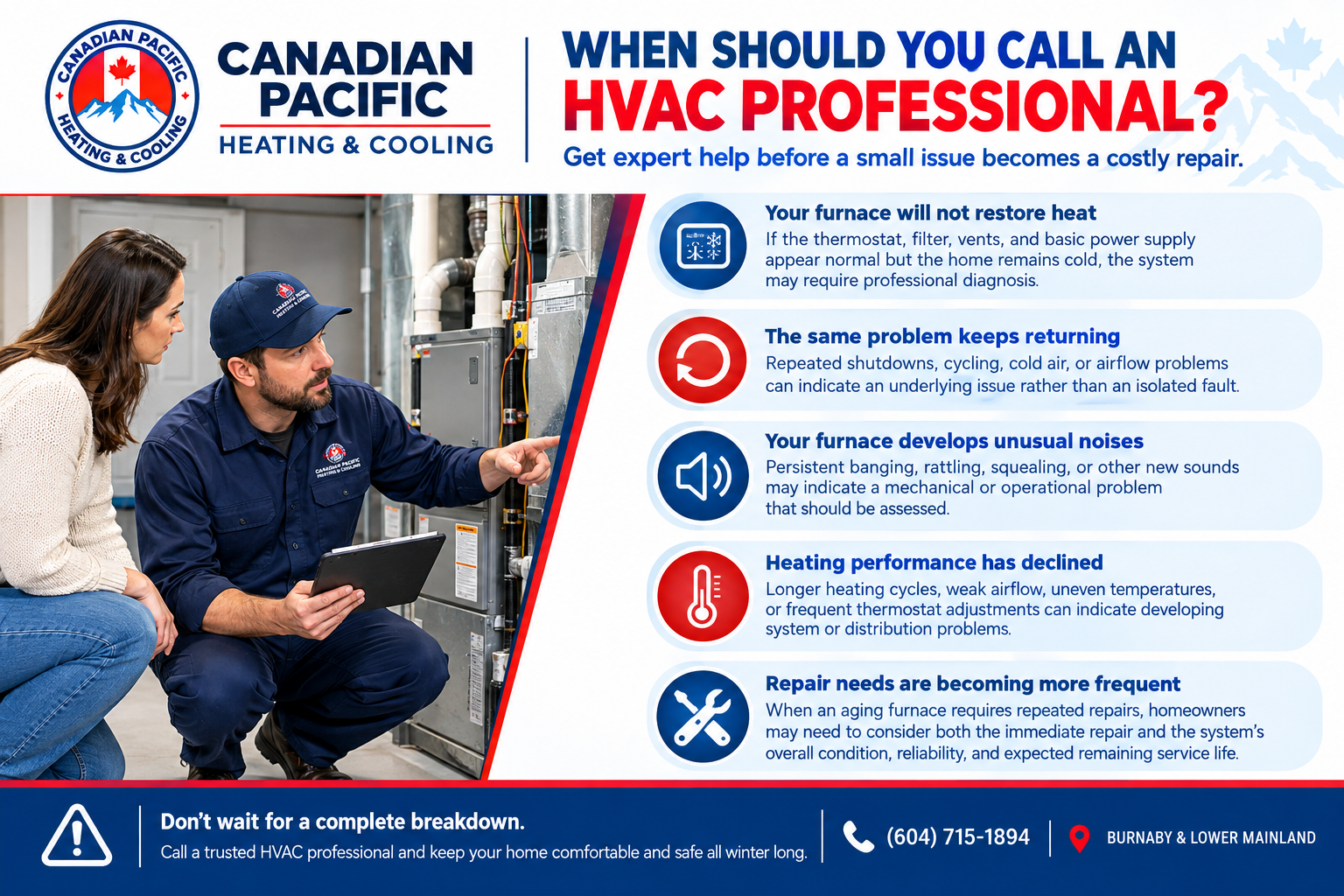
If these basic checks do not restore normal heating, or the same problem returns, further troubleshooting should be left to a qualified HVAC professional.
HVAC Problems You Should Not Try to Repair Yourself
Some heating problems go beyond routine homeowner troubleshooting. Modern furnaces combine gas or electrical systems, combustion components, safety controls, and moving mechanical parts. Attempting to repair these components without the appropriate training can create safety risks or cause further equipment damage.
Gas supply, burners, ignition components, heat exchangers, and combustion-related problems should be assessed by a qualified HVAC professional. The same applies to internal electrical components, wiring, capacitors, control boards, and other parts that require the furnace cabinet to be opened.
Repeated furnace shutdowns or safety lockouts also deserve attention rather than repeated resets. A shutdown may be the system responding to an underlying problem, and continually resetting it without finding the cause can leave the actual issue unresolved.
If a carbon monoxide alarm activates or carbon monoxide is suspected, treat it as a safety issue rather than an HVAC troubleshooting task. Follow your alarm manufacturer’s emergency instructions, leave the area if directed, and contact the appropriate emergency or qualified professional service.
How to Prevent Common Winter HVAC Problems
Winter heating problems are not always preventable, but routine attention can help identify developing issues before they become more disruptive. Preparing the heating system before periods of heavy use also gives homeowners an opportunity to address airflow, maintenance, and performance concerns early.
- Schedule routine HVAC maintenance: Seasonal inspection and maintenance can help identify developing mechanical, electrical, airflow, or performance concerns before they become more significant.
- Maintain the air filter properly: Check the filter regularly and replace or maintain it according to the manufacturer’s recommendations, filter type, system requirements, and household conditions.
- Keep vents and equipment areas clear: Avoid blocking supply and return vents with furniture or other objects, and keep accessible HVAC equipment areas free of unnecessary obstructions.
- Pay attention to early warning signs: New noises, weak airflow, frequent cycling, uneven heating, or unexplained changes in energy use should not be routinely ignored.
- Know your heating system: Before winter arrives, know your furnace type, approximate age, filter location, thermostat operation, and available service history. This information can make troubleshooting and professional diagnosis easier.
How to Prevent Common Winter HVAC Problems
Preventing winter HVAC problems starts with routine care before a heating system is under heavy demand. Regular maintenance can help identify worn components, restricted airflow, unusual operating patterns, and other developing issues before they become major heating disruptions. Homeowners should also keep the system accessible, follow the manufacturer’s maintenance guidance, and pay attention to changes in performance.
Air filters deserve particular attention because restricted airflow can affect heating performance. There is no single replacement schedule that works for every home. Filter type, equipment requirements, household conditions, pets, and indoor air quality concerns can all affect how often a filter needs attention. Follow the manufacturer’s recommendations and inspect the filter regularly rather than relying only on a fixed calendar interval.
Keep indoor and outdoor HVAC components clear of furniture, stored items, debris, or other obstructions where applicable. Good airflow and accessible equipment make it easier for the system to operate properly and for problems to be identified during maintenance.
It is also important to respond to early warning signs. New furnace noises, reduced airflow, uneven heating, frequent cycling, repeated thermostat adjustments, or unexpected changes in energy use can indicate that the system needs attention. Addressing these symptoms early may help prevent a minor heating issue from developing into a more disruptive winter HVAC problem.
Before winter arrives, homeowners should also know their equipment type, approximate system age, filter location, thermostat operation, and basic service history. Having this information available can make troubleshooting and professional diagnosis more straightforward when heating issues occur.
Furnace Repair vs. Furnace Replacement: What Should Homeowners Consider?
The choice between furnace repair and replacement depends on more than the age of the equipment. The nature of the problem, overall system condition, repair frequency, operating performance, remaining service life, and availability of replacement parts should all be considered before making a decision.
When Repair May Make Sense
Repair can be a practical option when the problem is isolated and the furnace remains in generally good condition. A professional can assess the failed component, determine whether other issues are present, and explain the expected cost and reliability after the repair.
Factors that may support repair include:
- A specific, repairable component has failed.
- The furnace is otherwise operating reliably.
- Repair costs are reasonable compared with replacement.
- The equipment has useful service life remaining.
- Replacement parts are available.
When Replacement May Be Worth Discussing
Replacement may become a consideration when breakdowns are becoming frequent, performance continues to decline, or repair requirements are increasing. Older equipment with persistent comfort problems or poor operating performance may also warrant a replacement assessment.
A furnace should not be replaced simply because it has reached a certain age. The decision should consider its actual condition, reliability, repair history, performance, and the homeowner’s long-term heating needs.
Keep Your Home Comfortable Through Winter
Winter can expose heating problems that may have gone unnoticed during milder weather. Recognizing symptoms such as weak airflow, uneven heating, unusual furnace noises, frequent cycling, or a furnace that stops producing heat can help homeowners respond before a minor issue becomes a larger disruption.
Simple checks involving the thermostat, air filter, vents, and basic power supply can help identify some straightforward problems. However, gas, combustion, electrical, internal component, and recurring heating issues should be handled by a qualified HVAC professional. Avoid repeatedly resetting a malfunctioning furnace without understanding why it is shutting down.
Preventative maintenance can also help identify developing problems and keep the heating system operating reliably through periods of higher winter demand. For homeowners in Burnaby, recognizing the difference between a simple troubleshooting issue and a problem requiring professional service can make winter heating problems easier to manage.
If your furnace is not heating properly or you are experiencing recurring heating issues, Canadian Pacific Heating & Cooling can assess the system and help determine the appropriate repair or service for your home.