Your HVAC maintenance checklist should include checking air filters, testing thermostat settings, clearing vents, inspecting outdoor equipment, and monitoring heating and cooling performance. Regular preventive maintenance helps homeowners identify developing issues and keep their systems operating as intended.
In Burnaby, British Columbia, heating equipment is particularly important during damp, cool winters, while air conditioners and heat pumps need attention before warmer weather arrives. Neglecting routine checks can allow airflow restrictions, drainage problems, and equipment faults to go unnoticed. However, not every maintenance task belongs on a DIY list. Electrical repairs, refrigerant work, and combustion inspections require appropriately qualified professionals.
This guide explains the essential HVAC maintenance tasks homeowners should complete throughout the year, how to care for different heating and cooling systems, when to schedule a professional HVAC tune up, and which warning signs should never be ignored.
HVAC Maintenance Checklist: Essential Tasks for Homeowners
Use this checklist as a starting point for routine home maintenance. Follow your equipment manufacturer’s instructions because requirements vary by system and component.
- Inspect the air filter: Check its condition and replace or clean it as directed. Dust, pets, and frequent system use may mean more frequent attention is needed.
- Check the thermostat: Confirm the correct heating or cooling mode, programmed schedule, and battery condition where applicable.
- Clear vents and return grilles: Remove dust from accessible surfaces and keep furniture, curtains, and other obstructions away.
- Inspect the outdoor unit: Remove loose leaves and debris from around the heat pump or air conditioner while maintaining the manufacturer’s recommended clearance.
- Monitor system performance: Notice unusual noises, persistent odours, weak airflow, frequent cycling, or inconsistent temperatures.
- Check accessible drainage areas: Look for unexpected water accumulation around equipment. Do not dismantle drain lines or internal components.
- Keep maintenance records: Record filter changes, service visits, recurring symptoms, and repairs to help identify developing problems.
These tasks cover basic observations and accessible maintenance. They do not replace professional inspections of electrical components, refrigerant circuits, gas connections, burners, or other internal equipment.
Seasonal HVAC Maintenance for Burnaby Homes
Burnaby’s damp winters and seasonal summer heat make it useful to prepare heating and cooling equipment before periods of heavier use. Your seasonal HVAC maintenance routine should reflect the system installed in your home.
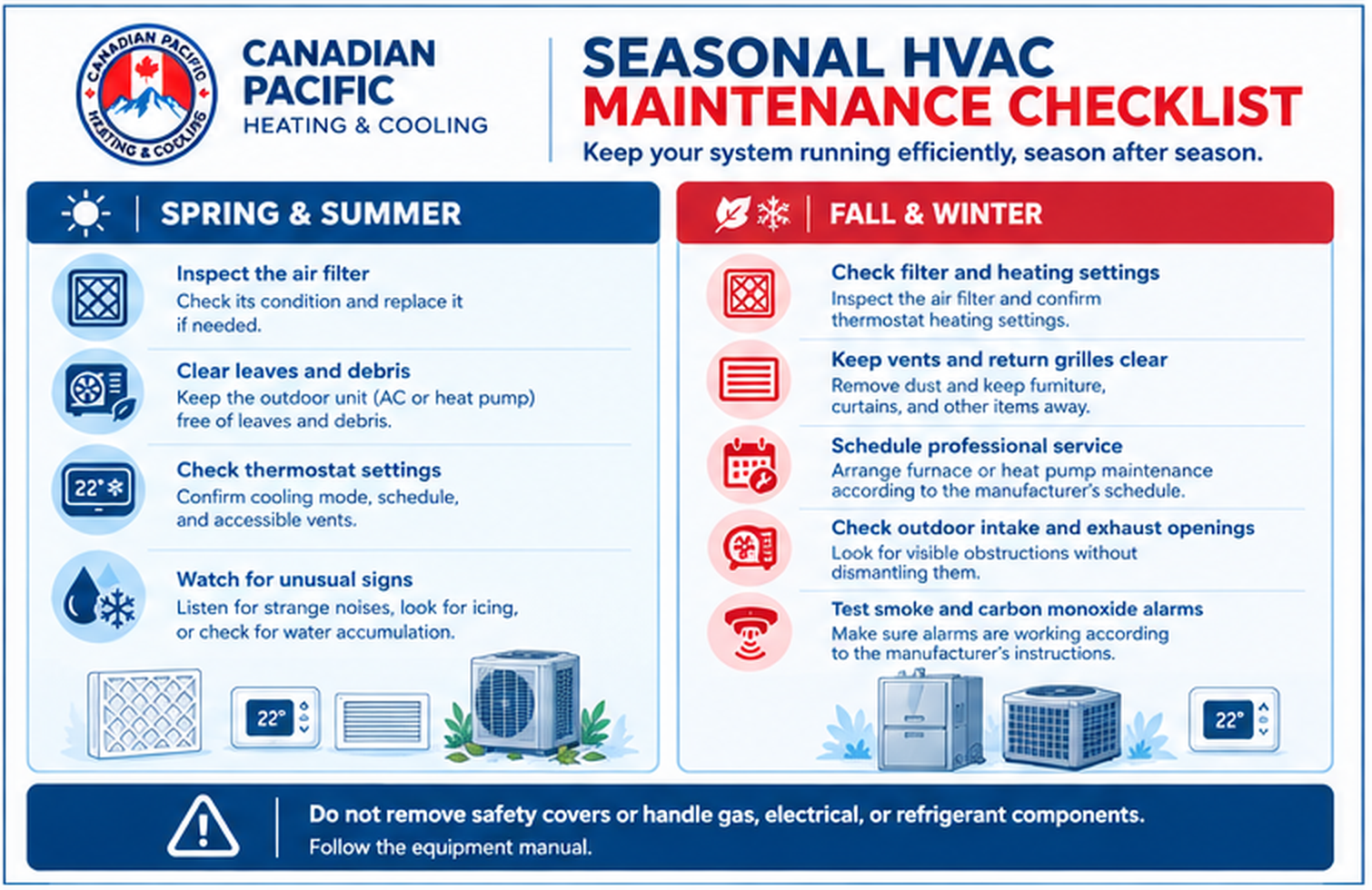
Spring and Summer Checklist
Before warmer weather arrives:
- Inspect the air filter and replace it if needed.
- Clear debris around the outdoor condenser or heat pump.
- Check thermostat cooling settings and accessible vents.
- Look for unusual noise, visible damage, or water accumulation.
- Arrange air conditioner or heat pump servicing if due.
During summer, monitor cooling performance and indoor comfort. Persistent icing, poor cooling, or recurring shutdowns warrant professional assessment.
Fall and Winter Checklist
Before the heating season:
- Check the filter and thermostat’s heating settings.
- Keep supply registers and return grilles unobstructed.
- Arrange furnace or heat pump maintenance according to the manufacturer’s schedule.
- Check accessible exterior intake and exhaust openings for visible obstructions without dismantling them.
- Test smoke and carbon monoxide alarms according to their instructions.
During winter, keep required furnace openings clear. For heat pumps, follow manufacturer guidance for snow, ice, and drainage around the outdoor unit. Some frost can occur during normal operation, but persistent heavy ice or declining performance should be checked by a technician.
Maintenance Tips for Furnaces, Heat Pumps, and Air Conditioners
Different HVAC systems share basic maintenance needs, but each has specific considerations.
Furnace Maintenance
Check the filter, thermostat, vents, and general heating performance. Keep accessible intake and exhaust openings clear where applicable. Watch for unusual sounds, repeated shutdowns, or changes in heating output.
Leave burner servicing, gas connections, combustion testing, heat exchanger inspections, and internal electrical work to a qualified technician. If you notice a suspected gas leak or a carbon monoxide alarm activates, leave the affected area and seek appropriate emergency assistance.
Heat Pump Maintenance
Heat pumps provide heating and cooling, so their maintenance needs span multiple seasons. Check accessible filters, maintain clear airflow, and keep the outdoor unit free of loose debris. Monitor heating and cooling performance throughout the year.
Defrost cycles can produce temporary changes in operation and visible frost. Persistent heavy ice, unusual noise, or poor performance should not be treated as normal without assessment.
Air Conditioner and Ductless Mini-Split Maintenance
For central air conditioners, inspect filters, keep the outdoor unit unobstructed, and monitor accessible condensate drainage areas.
For ductless mini-splits, clean or replace indoor filters according to the manufacturer’s instructions. Keep indoor air inlets and outlets clear, and inspect the outdoor unit’s surroundings. Internal coil cleaning, refrigerant diagnosis, and technical repairs should be handled professionally.
Which HVAC Maintenance Tasks Can You Do Yourself?
Homeowners can handle several routine tasks without opening equipment or working on technical components.
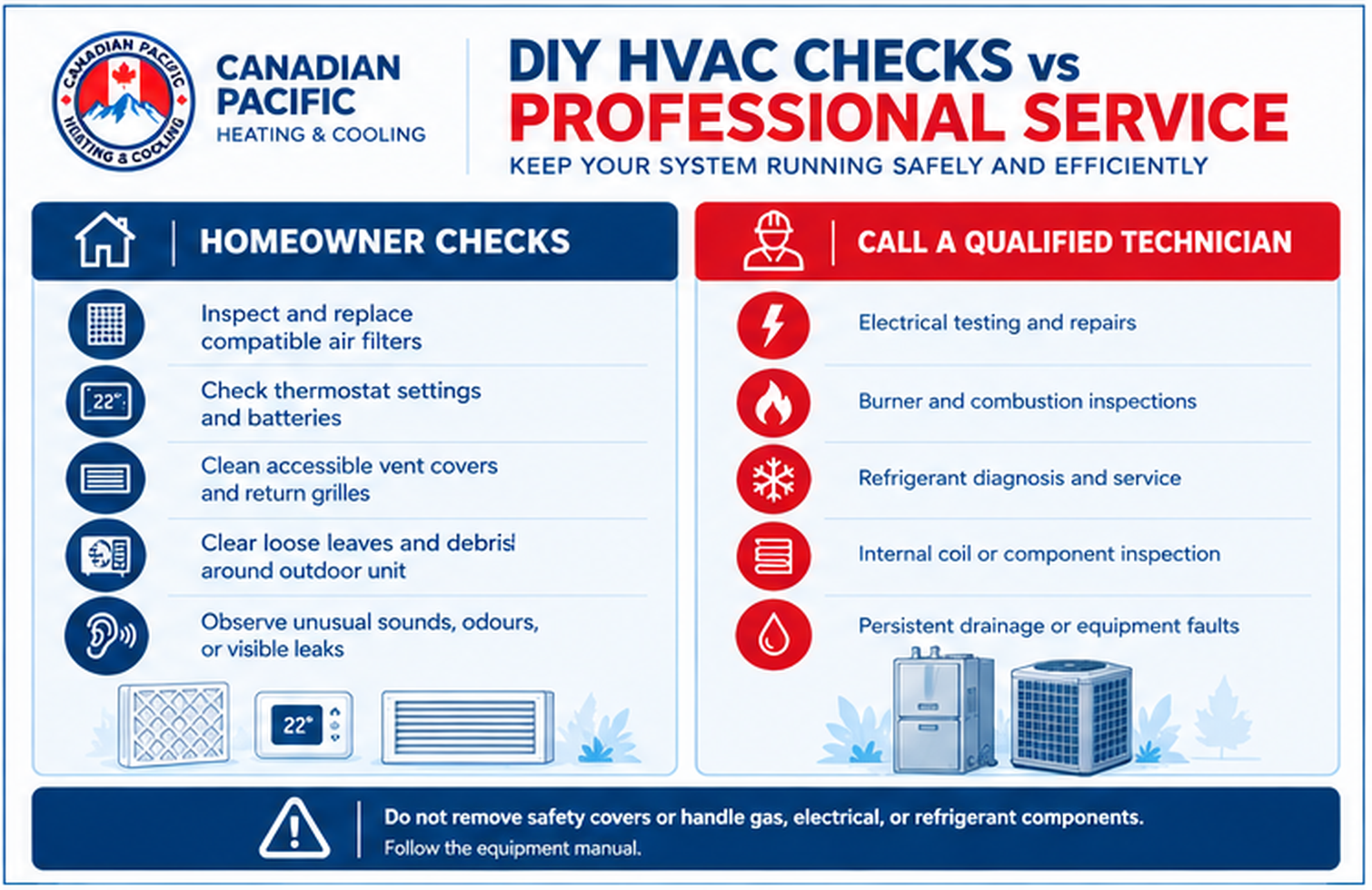
| Homeowner tasks | Professional tasks |
| Inspect and replace compatible air filters | Test electrical components and perform repairs |
| Clean accessible vent covers and return grilles | Inspect burners and combustion performance |
| Check thermostat settings and batteries | Diagnose refrigerant-related problems |
| Remove loose debris around outdoor units | Inspect internal coils and components requiring disassembly |
| Observe unusual sounds, odours, and visible leaks | Diagnose persistent drainage or equipment faults |
Always follow the equipment manual and avoid removing safety covers or accessing unsafe areas. Do not use excessive water pressure on outdoor coils, bend coil fins, or attempt to handle refrigerants.
A filter that looks clean does not necessarily rule out an airflow problem. If rooms remain unevenly heated or cooled after you check accessible filters and vents, a technician may need to assess the system rather than simply replacing parts.
Warning Signs That Your HVAC System Needs Professional Attention
Routine maintenance helps you notice changes, but symptoms alone rarely identify the exact fault. Arrange professional assessment if you observe:
- Weak airflow or uneven temperatures: A dirty filter, obstruction, duct issue, or equipment fault may be responsible.
- Unusual noises: New grinding, rattling, buzzing, or persistent vibration can indicate a developing problem.
- Unexpected water accumulation: Drainage issues or other equipment problems may require investigation.
- Persistent icing: Heavy ice on an air conditioner or heat pump may indicate an airflow or equipment issue.
- Frequent cycling or poor performance: Repeated starts and stops or difficulty maintaining the set temperature deserve attention.
- Unexplained energy-use changes: Weather, settings, usage, and equipment condition can all affect consumption.
Check accessible filters, thermostat settings, and vents where safe. If the problem continues, avoid repeated restarts or attempts to repair internal components.
How Often Should HVAC Maintenance Be Scheduled?
There is no single maintenance schedule that suits every system. The appropriate frequency depends on the equipment, manufacturer’s instructions, household conditions, and how often the system operates.
Air filters: Inspect filters regularly and replace or clean them as directed. Homes with pets, renovation dust, or heavier system use may need more frequent attention.
Furnaces: Arrange professional maintenance according to the manufacturer’s recommendations, particularly before sustained heating demand. A technician can inspect relevant operating and safety components.
Heat pumps and air conditioners: Follow equipment-specific servicing guidance and address performance changes promptly. Seasonal checks are useful before periods of heavier heating or cooling use.
What Does a Professional HVAC Tune-Up Include?
Depending on the equipment and service scope, a professional HVAC tune up may include:
- Reviewing overall equipment condition and operating performance.
- Checking thermostat response and airflow.
- Inspecting relevant filters, coils, and accessible components.
- Assessing applicable electrical, combustion, or refrigerant-related concerns.
- Explaining findings and identifying recommended repairs.
Ask what the appointment includes and whether any corrective work is charged separately. Regular servicing can help identify certain problems, but it cannot guarantee that breakdowns will never occur or that energy bills will decrease by a specific amount.
Keep Your HVAC System Ready for Every Season
A consistent HVAC maintenance checklist helps you monitor air filters, thermostat settings, airflow, outdoor equipment, and system performance throughout the year. Seasonal preparation is particularly useful for Burnaby homeowners who rely on dependable heating during winter and cooling during warmer periods.
Homeowner maintenance has limits. Persistent performance problems, unusual noises, water leaks, and icing may require professional diagnosis, while suspected gas leaks and carbon monoxide alarms demand immediate safety action.
Canadian Pacific Heating & Cooling provides residential heating and cooling services in Burnaby and the Lower Mainland, including furnace maintenance, heat pump services, air conditioner maintenance, and HVAC repairs.