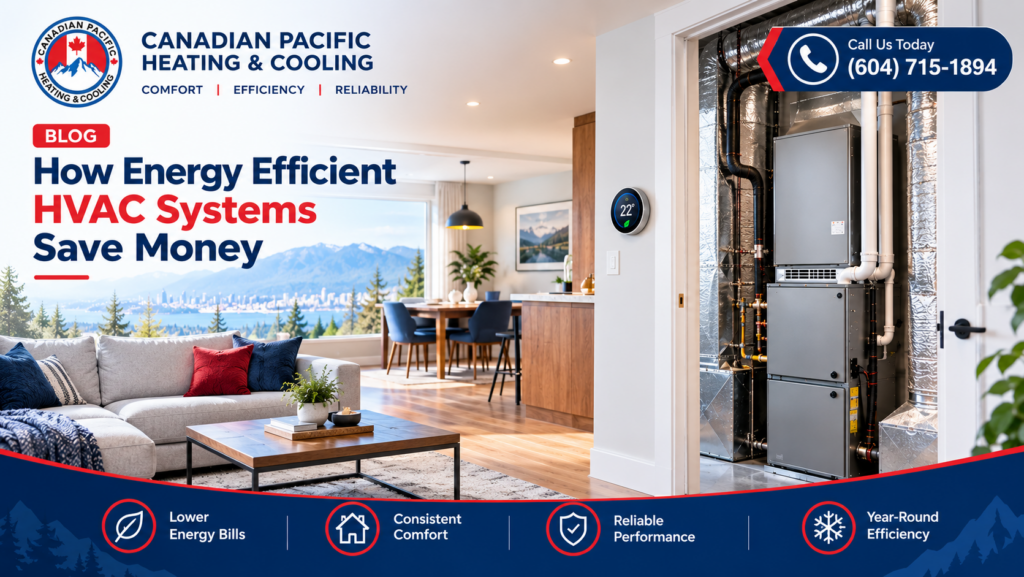
An energy efficient HVAC system can help reduce the amount of energy your home needs for heating and cooling, which can lower operating costs over time. However, efficiency is not determined by the equipment rating alone. System sizing, airflow, thermostat settings, installation, and maintenance all affect how efficiently your HVAC system performs.
For Burnaby homeowners, this matters because an aging or poorly performing system may consume more energy while providing less consistent comfort. Rising heating costs, uneven temperatures, frequent cycling, or recurring repairs can all be reasons to look more closely at system performance.
This article explains what makes an HVAC system efficient, how furnace and heat-pump efficiency affects energy use, and practical ways to save energy without immediately replacing your equipment. It also covers when an older HVAC system may be worth evaluating for repair, maintenance, or replacement.
What Makes an HVAC System Energy Efficient?
An energy efficient HVAC system is designed to provide the required heating or cooling while using less energy to do so. Efficiency depends on more than the equipment itself. The system’s rating, size, installation, airflow, controls, and operating condition all influence how much energy it uses.
Understanding HVAC Efficiency Ratings
Efficiency ratings help homeowners compare HVAC equipment based on how effectively it uses energy. For heating equipment, AFUE indicates how efficiently a furnace converts fuel into usable heat. For air conditioners and heat pumps, ratings such as SEER2 and HSPF2 help indicate seasonal cooling and heating efficiency. Higher efficiency ratings can reduce energy use when the system is properly selected and installed.
These ratings should be considered alongside the equipment’s intended application rather than viewed in isolation. A highly rated system cannot deliver its expected efficiency if other parts of the installation are poorly matched or maintained.
Why Proper System Sizing Matters
Correct sizing is another important part of efficient heating and cooling. An oversized HVAC system may cycle on and off more frequently instead of operating steadily, while an undersized system may run for extended periods trying to meet the home’s heating or cooling demand.
Proper sizing considers factors such as the home’s layout, insulation, windows, air leakage, and heating or cooling requirements. Choosing equipment based on the actual needs of the property can support more consistent comfort, efficient operation, and controlled energy use.
How Energy Efficient HVAC Systems Reduce Energy Costs
The main financial benefit of energy efficient HVAC equipment is that it can deliver the heating or cooling a home needs while using energy more effectively. When a system operates efficiently, less energy may be required to maintain a comfortable indoor temperature, which can help control monthly utility costs. The actual savings depend on factors such as equipment efficiency, system condition, home insulation, thermostat settings, and how often the HVAC system operates.
Efficient Equipment Uses Less Energy
Modern HVAC equipment is designed to improve how energy is converted into heating or cooling. A high-efficiency furnace, for example, can convert a greater portion of its fuel into usable heat. Efficient air conditioners and heat pumps are similarly designed to provide cooling or heating with less electricity under their rated operating conditions.
Replacing an inefficient system is not the only way to save energy. Proper maintenance, clean filters, adequate airflow, and correct installation also help equipment operate closer to its intended performance.
Variable-Speed and Multi-Stage Operation
Some HVAC systems can adjust their output rather than operating only at full capacity. Variable-speed components can change airflow or system operation according to the current demand, while multi-stage equipment can operate at different capacity levels.
This approach can help the system respond more closely to changing indoor conditions instead of repeatedly switching between full operation and being off. More consistent operation can also support steadier temperatures and improved comfort while helping avoid unnecessary energy use.
Furnace Efficiency and Heating Costs
For homes that rely on a furnace, equipment efficiency can have a noticeable effect on how much energy is required to maintain indoor comfort during the heating season. A higher-efficiency furnace converts a greater portion of its fuel into usable heat, while some energy is lost through the combustion and exhaust process. However, the furnace’s rated efficiency is only one part of overall heating performance.
What Does Furnace Efficiency Mean?
Furnace efficiency is commonly expressed using AFUE (Annual Fuel Utilization Efficiency). This rating indicates how efficiently a gas furnace converts fuel into usable heat over a typical heating season. A higher AFUE generally means less fuel is wasted during operation.
However, a furnace cannot achieve its intended performance if it is incorrectly sized, poorly installed, restricted by inadequate airflow, or not properly maintained. The condition of the ductwork and the home’s insulation and air leakage can also influence how much energy is ultimately needed for heating.
Signs Your Furnace May Be Wasting Energy
Increasing heating bills can sometimes indicate declining furnace performance, particularly when household usage and energy rates have not changed significantly. Other signs may include frequent cycling, uneven temperatures, weak airflow, unusual operating behaviour, or increasingly frequent repairs.
These symptoms do not automatically mean the furnace needs replacement. Restricted airflow, thermostat problems, ductwork issues, or other system faults can produce similar symptoms. A proper assessment can help identify whether the issue involves the furnace itself or another part of the heating system.
Furnace Maintenance and Energy Efficiency
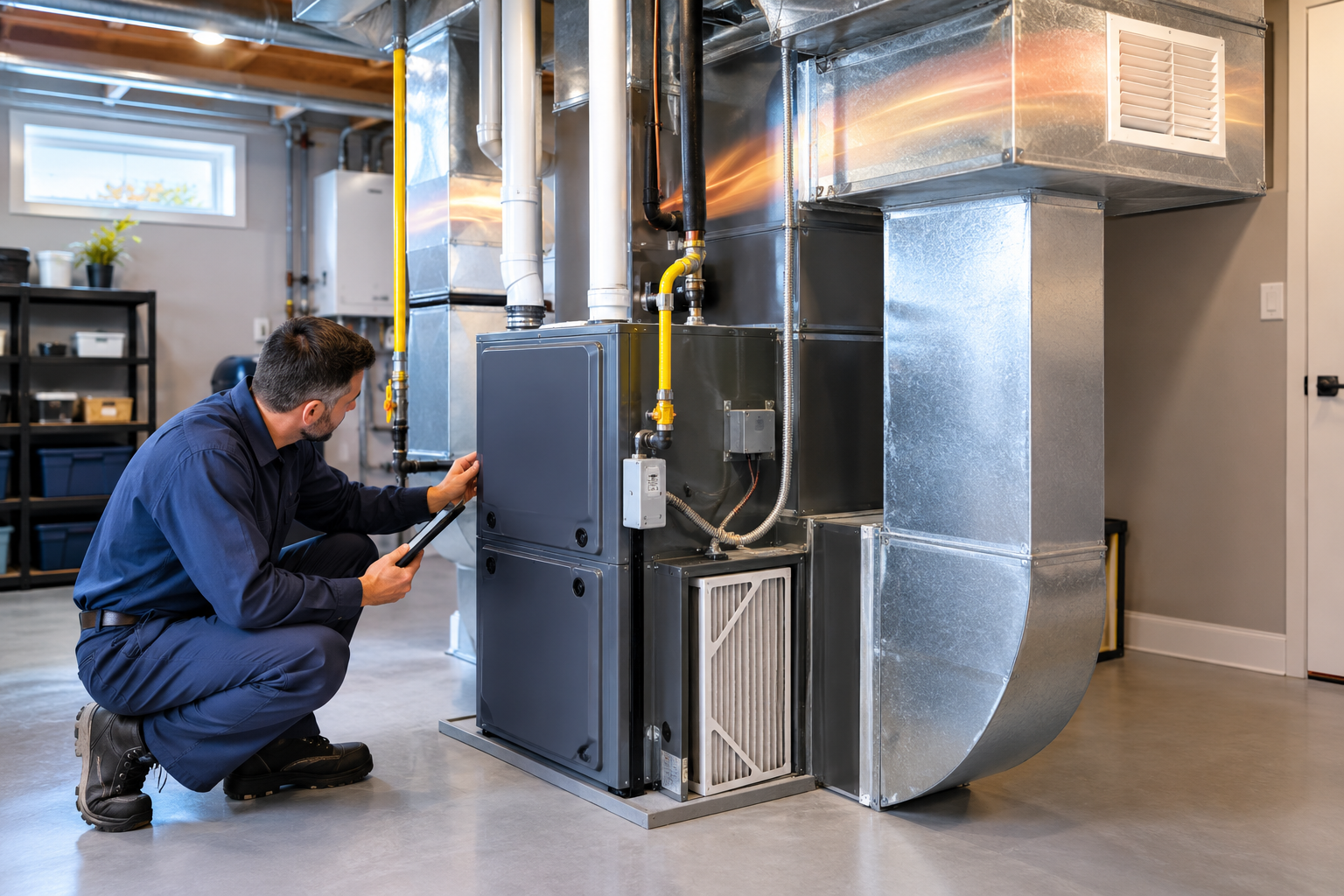
Professional HVAC maintenance can help keep a furnace operating as intended by checking airflow, components, electrical connections, safety controls, and other manufacturer-recommended maintenance points. Identifying restricted airflow, worn components, or operating problems early can also help prevent performance issues from continuing unnoticed.
For homeowners experiencing repeated furnace problems or declining heating performance, furnace repair may address the underlying issue without requiring complete system replacement.
Can a Heat Pump Save Energy?
Heat pumps are another option homeowners may consider when evaluating energy efficient HVAC systems. Instead of generating heat through combustion, a heat pump transfers available heat from one place to another. During heating mode, it extracts heat from outdoor air and moves it indoors. The process reverses during cooling, allowing the same system to provide both heating and air conditioning.
How Heat Pumps Work
A heat pump uses an outdoor unit, refrigerant, compressor, and indoor air-distribution components to move heat. Even when outdoor temperatures are cool, there is still usable heat energy that can be transferred. The system concentrates and moves that heat indoors rather than producing heat in the same way as a conventional furnace.
This approach can make heat pumps highly efficient under suitable operating conditions. However, actual performance depends on the equipment, outdoor temperature, system sizing, installation quality, and characteristics of the home.
Heat Pump Efficiency Compared With Conventional Heating
A heat pump may use less energy to provide a given amount of heating than some conventional systems, but that does not mean it will always have lower operating costs in every home. Electricity rates, natural-gas costs, equipment efficiency, outdoor temperatures, and the home’s insulation can all affect the result.
Homeowners should therefore compare the expected operating characteristics of the complete system rather than relying on a general claim that one heating technology will always be cheaper.
When a Heat Pump May Make Sense for a Home
A heat pump may be worth investigating when replacing older HVAC equipment, planning a home renovation, or looking for one system that can provide both heating and cooling. A professional assessment can help determine whether the home’s layout, insulation, existing ductwork, electrical capacity, and heating requirements are suitable for a heat-pump system.
7 Ways Homeowners Can Improve HVAC Energy Efficiency
Improving HVAC efficiency does not always require installing new equipment. Homeowners can often reduce unnecessary energy use by improving how the system operates and addressing conditions that make heating or cooling more difficult.
- Use a programmable or smart thermostat. Set heating or cooling schedules around occupancy rather than conditioning an empty home unnecessarily. Make sure the thermostat is compatible with the HVAC system.
- Replace or clean air filters regularly. A loaded filter can restrict airflow and make the system work harder. Follow the filter manufacturer’s and HVAC equipment manufacturer’s recommendations, adjusting frequency for pets, dust, occupancy, and household conditions.
- Keep vents and registers clear. Furniture, rugs, curtains, or other obstructions can interfere with supply and return airflow. Keeping these areas unobstructed helps conditioned air circulate properly.
- Schedule HVAC maintenance. Routine professional maintenance can identify airflow restrictions, worn components, and other issues that may affect system performance.
- Seal air leaks and improve insulation. Heating efficiency depends partly on how well the home retains conditioned air. Drafts, inadequate insulation, and other building-envelope problems can increase heating demand even when the HVAC equipment itself is efficient.
- Use equipment that is properly sized. Capacity should match the home’s heating and cooling requirements rather than being selected solely by square footage. Proper sizing helps avoid inefficient operation and comfort problems.
- Address HVAC problems early. Persistent weak airflow, unusual cycling, uneven temperatures, or declining performance should not simply be ignored. Identifying the cause early can help prevent a minor performance issue from becoming a larger repair or efficiency concern.
When Should You Replace an Older HVAC System?
Replacing an HVAC system can involve a significant upfront cost, so energy efficiency should be considered alongside reliability, repair needs, comfort, and expected service life. An older system does not automatically need replacement simply because newer equipment is more efficient. Instead, homeowners should look at the overall condition and operating performance of the system.
Your HVAC System Requires Frequent Repairs
Repeated breakdowns can make an aging system increasingly expensive or inconvenient to operate. If repairs are becoming more frequent, homeowners may want to compare the cost of continued repairs with the expected benefits and operating characteristics of replacement equipment.
Your Energy Bills Are Increasing Without Major Usage Changes
A noticeable increase in energy consumption without a corresponding change in thermostat settings, occupancy, or weather conditions may justify an HVAC inspection. Reduced equipment performance, airflow restrictions, ductwork problems, or other issues can contribute to higher operating costs.
Your Home Has Uneven Temperatures
Rooms that remain too cold or too warm do not necessarily indicate an inefficient furnace. The cause may involve equipment capacity, ductwork, airflow, thermostat location, insulation, or air leakage. These factors should be investigated before assuming replacement is the solution.
Your Existing Equipment Is Outdated
Older HVAC equipment may have lower efficiency than many current systems. If an aging system is also experiencing declining performance or frequent repairs, comparing its expected future operating and maintenance costs with replacement options can be useful.
Repair vs. Replacement: What Should Homeowners Consider?
Consider the system’s age, repair history, current efficiency, expected remaining service life, energy costs, comfort requirements, and available replacement options together. This broader assessment provides a more useful basis for deciding whether continued repair or replacement makes sense.
Does HVAC Maintenance Really Save Energy?
Yes, regular HVAC maintenance can support efficient system operation, although it does not guarantee a specific reduction in energy costs. Maintenance helps identify conditions that can affect performance, such as restricted airflow, worn components, electrical problems, or other issues that may cause equipment to operate outside its intended condition.
What Professional HVAC Maintenance Includes
Professional maintenance typically involves inspecting the system and checking components that affect safe and reliable operation. Depending on the equipment, this may include:
- System and component inspection
- Airflow evaluation
- Filter assessment
- Electrical and control checks
- Safety checks
- Performance evaluation
- Manufacturer-recommended maintenance
The exact maintenance tasks vary by equipment type, age, condition, and manufacturer requirements.
Why DIY Maintenance Has Limits
Homeowners can handle simple tasks such as replacing an accessible filter, keeping vents clear, and observing changes in system operation. More complex work should be handled by a qualified HVAC professional.
Gas-fired equipment, combustion components, refrigerant circuits, electrical components, and internal mechanical parts can require specialized knowledge and testing. Attempting to adjust or repair these components without the appropriate expertise can create safety risks or cause further equipment problems.
Maintenance is most useful when it goes beyond simply cleaning visible components. A proper HVAC assessment should consider airflow, equipment operation, safety, and the condition of relevant components so potential performance problems are not overlooked.
Energy-Efficient HVAC Mistakes That Can Increase Energy Use
Even an energy-efficient HVAC system can consume more energy than necessary when it is poorly maintained, incorrectly sized, or operated inefficiently. Recognizing these common mistakes can help homeowners improve comfort and manage heating costs.
Choosing an Oversized HVAC System
A larger system is not automatically more efficient. Oversized furnaces and air conditioners may cycle on and off frequently instead of operating for an appropriate period. This can affect comfort, temperature consistency, and overall efficiency. Professional load calculations help determine the right equipment capacity for the home.
Ignoring Dirty Air Filters
Clogged filters restrict airflow, making it harder for the system to circulate heated or cooled air. Check filters regularly and replace them according to the manufacturer’s recommendations and household conditions.
Skipping Preventive Maintenance
Dust buildup, restricted airflow, worn components, and incorrect system settings can affect HVAC performance. Routine maintenance helps identify these issues before they contribute to ongoing operating problems.
Setting the Thermostat Too Aggressively
Setting the thermostat much higher or lower than necessary does not make a system heat or cool the home faster. Instead, use reasonable temperature settings and adjust schedules according to occupancy.
Replacing Equipment Without Addressing Airflow Problems
Installing a new furnace or heat pump will not necessarily resolve uneven temperatures or excessive energy use if the underlying problem involves leaking ductwork, poor insulation, or blocked airflow. Evaluating the complete system helps identify where improvements are needed.
How Much Can an Energy-Efficient HVAC System Save?
An energy-efficient HVAC system can reduce energy consumption, but the amount homeowners save depends on their existing equipment, household energy use, and the efficiency of the replacement system. Replacing an older, inefficient furnace may offer different results from upgrading a relatively modern system that already operates properly.
Why Your HVAC Savings May Differ From Another Homeowner’s
Consider two homes in Burnaby. The first has an older furnace, limited insulation, and noticeable air leaks. The second has a well-maintained heating system, effective insulation, and sealed windows and doors. Even if both homeowners install similarly efficient HVAC equipment, their energy consumption and potential savings may differ because their starting conditions are not the same.
Other factors also influence operating costs, including natural gas and electricity rates, thermostat settings, equipment sizing, installation quality, and household heating habits. A heat pump’s operating costs will also depend on its performance in local weather conditions and the home’s heating requirements.
Rather than relying on a general savings percentage, compare your current energy use with the expected performance of the proposed system. Ask for estimates based on your home’s heating and cooling needs, the equipment being considered, and applicable utility rates. This provides a more useful basis for evaluating whether an upgrade could justify its upfront cost.
How to Choose an Energy-Efficient HVAC System
Choosing an energy-efficient HVAC system involves more than comparing purchase prices or selecting the highest efficiency rating. Homeowners should consider how well the equipment suits their property, heating and cooling requirements, and expected energy use.
1. Compare the Right Efficiency Ratings
For furnaces, check the Annual Fuel Utilization Efficiency (AFUE) rating, which indicates how efficiently the furnace converts fuel into heat over a typical operating season. For heat pumps and air conditioners, compare the relevant SEER2 rating for cooling efficiency and HSPF2 rating for heating efficiency. Higher ratings generally indicate greater efficiency under standardized testing conditions.
2. Choose the Correct System Size
Equipment that is too large or too small can affect comfort and performance. A qualified HVAC professional can assess your home’s size, insulation, windows, air leakage, and heating and cooling loads to determine suitable equipment capacity.
3. Consider the Complete HVAC System
Evaluate ductwork, airflow, thermostat compatibility, filtration, and installation requirements alongside the equipment itself. Poor airflow or leaky ducts can undermine the performance of an otherwise efficient system.
4. Compare Long-Term Operating Costs
Consider the upfront price, estimated energy consumption, local utility rates, maintenance requirements, and potential repair costs. A more efficient system may cost more initially, so evaluating expected operating costs over time can help you make an informed decision.
Professional HVAC Guidance Can Help Maximize Efficiency
Improving HVAC efficiency starts with understanding how your existing system performs and where energy may be wasted. A professional assessment can help identify issues involving equipment condition, airflow, thermostat settings, ductwork, or incorrect system sizing. This is particularly useful when heating bills continue to rise, rooms have uneven temperatures, or the furnace or heat pump requires frequent repairs.
Canadian Pacific Heating & Cooling serves homeowners in Burnaby, British Columbia, with residential HVAC services. Depending on your home’s needs, a professional evaluation can help you understand whether maintenance, repairs, or replacement options deserve consideration.
Why Professional Installation Matters
Even high-efficiency equipment may not deliver its expected performance if it is incorrectly sized or installed. Proper installation involves selecting suitable equipment, checking airflow, configuring controls, and verifying system operation according to manufacturer requirements.
For homeowners considering a new furnace or heat pump, discussing installation requirements and expected operating costs before making a decision can help avoid unnecessary expenses. Addressing existing ductwork or insulation problems may also improve overall performance.
Conclusion: Make HVAC Efficiency Part of Your Energy-Saving Plan
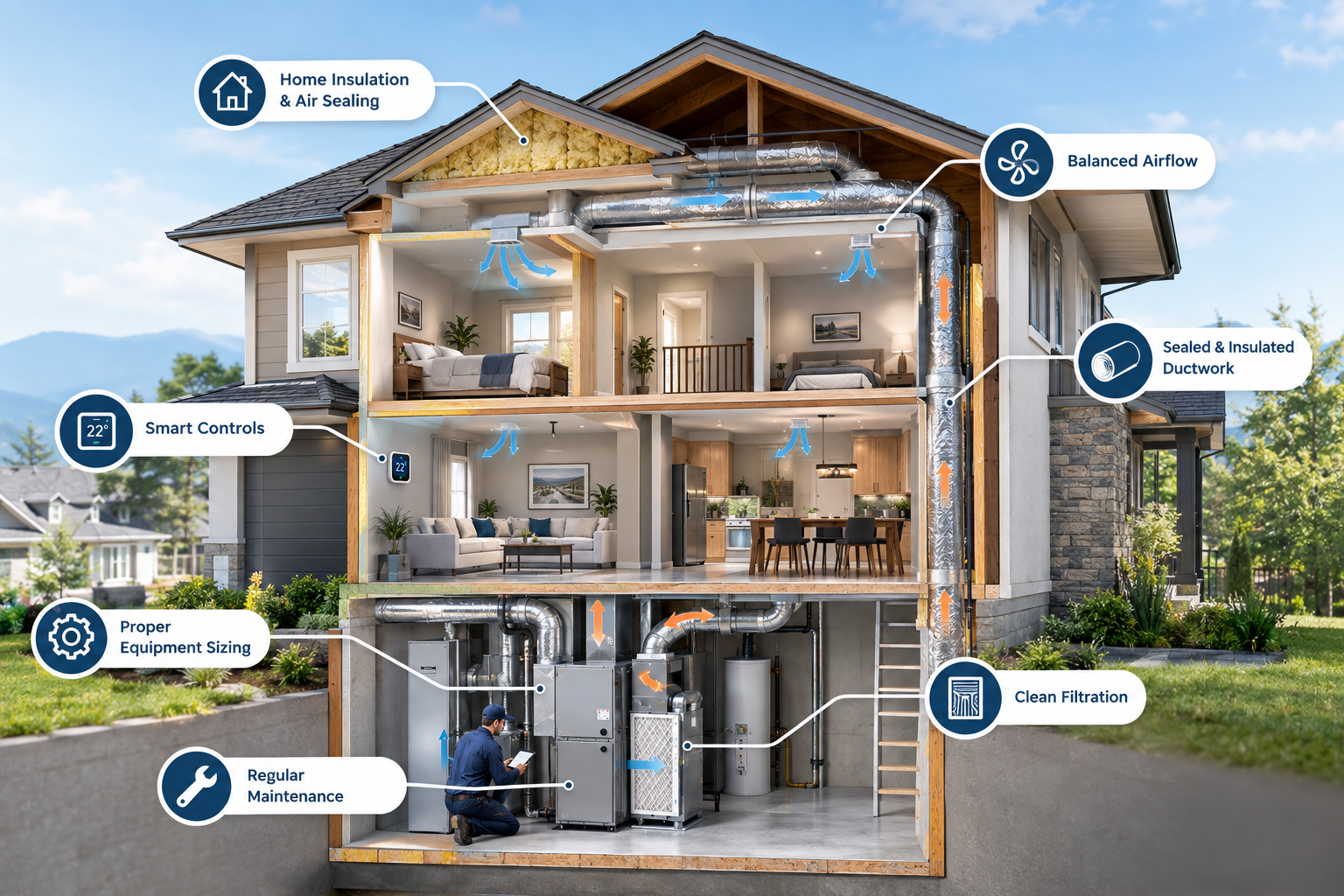
An energy-efficient HVAC system can help reduce household energy consumption, but equipment efficiency is only one part of the equation. Proper sizing, regular maintenance, clean filters, appropriate thermostat settings, and unrestricted airflow all contribute to system performance. Insulation and air sealing also matter because heat loss can increase the workload on your heating equipment.
For Burnaby homeowners, comparing the condition of an existing furnace with suitable high-efficiency furnace or heat pump options can help clarify whether maintenance, repairs, or replacement deserves consideration. Actual savings depend on your home’s heating needs, energy rates, equipment efficiency, and installation quality, so avoid relying on guaranteed savings figures.