If you’ve noticed unusual noises, uneven heating, rising energy bills, or your furnace blowing cold air, these could be early furnace repair signs that shouldn’t be ignored. Many furnace problems develop gradually, giving homeowners an opportunity to address them before they lead to a complete system breakdown during the coldest months of the year.
For homeowners in Burnaby, where dependable heating is essential throughout winter, recognizing these warning signs can help prevent unexpected repairs, improve energy efficiency, and keep your home safe and comfortable. In many cases, simple furnace troubleshooting can identify minor issues, while more serious problems require prompt attention from a qualified HVAC technician.
This article explains the 10 most common warning signs your furnace may need repair, outlines safe troubleshooting steps you can take, and helps you understand when it’s time to schedule professional service before winter arrives.
Why Early Furnace Repairs Matter Before Winter
Many homeowners don’t think about their furnace until the first cold snap arrives. Unfortunately, that’s also when hidden furnace problems are most likely to become complete system failures. Recognizing furnace repair signs early gives you the opportunity to fix minor issues before your heating system is working at full capacity throughout the winter.
Small problems — such as a clogged air filter, worn blower motor, faulty ignition component, or restricted airflow — can gradually reduce your furnace’s efficiency. As the system works harder to maintain your desired indoor temperature, it consumes more energy, places additional strain on internal components, and increases the likelihood of an unexpected breakdown. Addressing these issues promptly can help improve comfort, lower heating costs, and extend the lifespan of your equipment.
Waiting until winter to deal with furnace problems can also make repairs more inconvenient. During periods of cold weather, HVAC companies often experience higher demand for emergency service, which may result in longer wait times for appointments. Scheduling repairs before the heating season begins allows potential issues to be identified and resolved before they affect your home’s comfort.
For homeowners in Burnaby, preparing your heating system before temperatures drop is a practical way to improve reliability throughout the winter. Whether the issue is unusual noises, inconsistent heating, or reduced airflow, taking action early can help prevent more extensive repairs and reduce the risk of being left without heat when you need it most.
10 Warning Signs Your Furnace Needs Repair
1. Your Furnace Is Blowing Cold or Lukewarm Air
If your furnace is running but only produces cool or lukewarm air, something isn’t working as it should. Before assuming a major repair is needed, check that the thermostat is set to “Heat” and replace a dirty air filter if necessary. If the problem continues, it could indicate ignition issues, burner problems, a malfunctioning thermostat, or restricted airflow. Ignoring this common furnace repair sign may leave your home without reliable heat when temperatures drop.
2. Strange Noises Coming From the Furnace
A healthy furnace should operate with minimal noise. Loud banging, rattling, grinding, squealing, or repeated clicking sounds often indicate worn or loose components. For example, grinding may point to blower motor issues, while banging can result from delayed ignition or expanding ductwork. Although not every unusual sound signals a major repair, persistent noises should be inspected before they lead to more expensive damage.
3. Uneven Heating Throughout Your Home
If some rooms feel warm while others remain noticeably colder, your furnace may be struggling to distribute heat evenly. Common causes include clogged air filters, blocked vents, duct leaks, or a blower motor that’s losing efficiency. Uneven temperatures are among the more common furnace problems homeowners experience and often become more noticeable as outdoor temperatures continue to fall.
4. Your Energy Bills Suddenly Increase
A noticeable rise in heating costs without a significant change in weather or thermostat settings may indicate your furnace is working harder than necessary. Dirty components, worn parts, restricted airflow, or declining efficiency can all force the system to run longer heating cycles. Addressing these issues early can improve energy efficiency and help prevent additional wear on the furnace.
5. Your Furnace Turns On and Off Frequently
Frequent starting and stopping—known as short cycling—is a common issue that should not be ignored. It may be caused by a dirty air filter, overheating, thermostat placement, or a malfunctioning safety control. Besides increasing energy consumption, short cycling places extra strain on the furnace and can shorten the lifespan of important components if left unresolved.
6. The Burner Flame Is Yellow Instead of Blue
A properly operating natural gas furnace should typically produce a steady blue burner flame. A yellow or flickering flame may indicate incomplete combustion, contamination, or other combustion-related issues that require immediate attention. Because improper combustion can create dangerous conditions, including the potential for carbon monoxide production, this warning sign should always be inspected by a qualified HVAC technician.
Never attempt to adjust burners or combustion components yourself. Any change in flame colour should be professionally evaluated to ensure your furnace is operating safely.
7. You Notice Burning or Musty Odours
A slight burning smell when the furnace is first turned on for the season is often caused by dust burning off internal components and usually disappears after a short time. However, persistent burning, electrical, or musty odours can indicate overheating parts, damaged wiring, excessive dust buildup, or moisture-related issues within the system or ductwork. If unusual smells continue, arrange for a professional inspection.
8. Weak Airflow From Supply Vents
If warm air is coming from your vents but the airflow feels weak, your furnace may have a blower motor problem, clogged filter, blocked ductwork, or other airflow restriction. Reduced airflow makes it harder to heat your home efficiently and can increase operating costs as the furnace runs longer to reach the desired temperature.
9. Your Furnace Is More Than 15 Years Old
Most residential furnaces have an expected lifespan of approximately 15 to 20 years when properly maintained. As a furnace ages, components naturally wear out, repairs may become more frequent, and overall efficiency can decline. If your older furnace is experiencing repeated issues, it may be time to compare the cost of continued repairs with the benefits of replacing the system.
10. Your Carbon Monoxide Detector Has Activated
A carbon monoxide alarm should always be treated as an emergency. Leave the home immediately, move everyone to fresh air, and follow the guidance of your local emergency services. Do not operate the furnace again until it has been inspected and declared safe by a qualified professional. This is one of the most serious warning signs a homeowner can experience and should never be ignored.
Common Furnace Troubleshooting Steps Homeowners Can Try
Not every heating issue means your furnace requires an immediate repair. Some common furnace problems can be caused by simple maintenance items or incorrect settings. Before calling for service, you can safely perform the following furnace troubleshooting steps. Never remove furnace panels or attempt repairs involving gas, electrical, or combustion components.
- Check the thermostat settings. Make sure the thermostat is set to Heat, the temperature is higher than the current room temperature, and the batteries (if applicable) are working properly.
- Replace a dirty air filter. A clogged filter restricts airflow, forcing your furnace to work harder and potentially causing overheating, weak airflow, or short cycling. Most filters should be inspected monthly during the heating season.
- Verify the furnace switch and circuit breaker. Ensure the furnace power switch hasn’t been turned off accidentally and check your home’s electrical panel for a tripped breaker.
- Confirm that supply and return vents are open. Closed or blocked vents can reduce airflow and create uneven heating throughout your home. Move furniture, rugs, or curtains away from vents whenever possible.
- Keep the area around the furnace clear. Store boxes, cleaning supplies, and other household items away from the furnace to maintain proper airflow and provide safe access for future maintenance.
These checks can resolve simple operational issues, but if your furnace continues to blow cold air, makes unusual noises, or repeatedly shuts off, it’s best to arrange a professional inspection. Continued operation with unresolved issues can lead to more extensive repairs.
When DIY Furnace Troubleshooting Isn’t Enough
Basic furnace troubleshooting can resolve simple issues such as incorrect thermostat settings or a clogged air filter, but some problems require professional diagnosis and repair. Continuing to operate a furnace with mechanical, electrical, or combustion-related faults can increase repair costs and create potential safety risks.
If you notice the smell of natural gas, turn off the furnace if it is safe to do so, leave the home immediately, and contact your gas utility or emergency services. Similarly, if your carbon monoxide detector activates, everyone should leave the home right away and the furnace should not be used until it has been inspected by a qualified HVAC technician.
Other warning signs that should not be ignored include repeated breaker trips, ignition failures, persistent short cycling after replacing the air filter, loud grinding noises, or signs of a cracked heat exchanger. These issues often require specialized tools, testing equipment, and technical expertise to diagnose safely and accurately.
If you’ve noticed any of these warning signs or your furnace isn’t operating reliably, learn more about our Furnace Repair Services and schedule a professional inspection before minor issues become costly winter breakdowns.
How Annual Furnace Maintenance Helps Prevent Repairs
Scheduling professional furnace maintenance once a year—ideally before the heating season—can help identify small issues before they develop into major repairs. Regular inspections also improve system performance, helping homeowners stay comfortable while reducing unnecessary wear on their heating equipment.
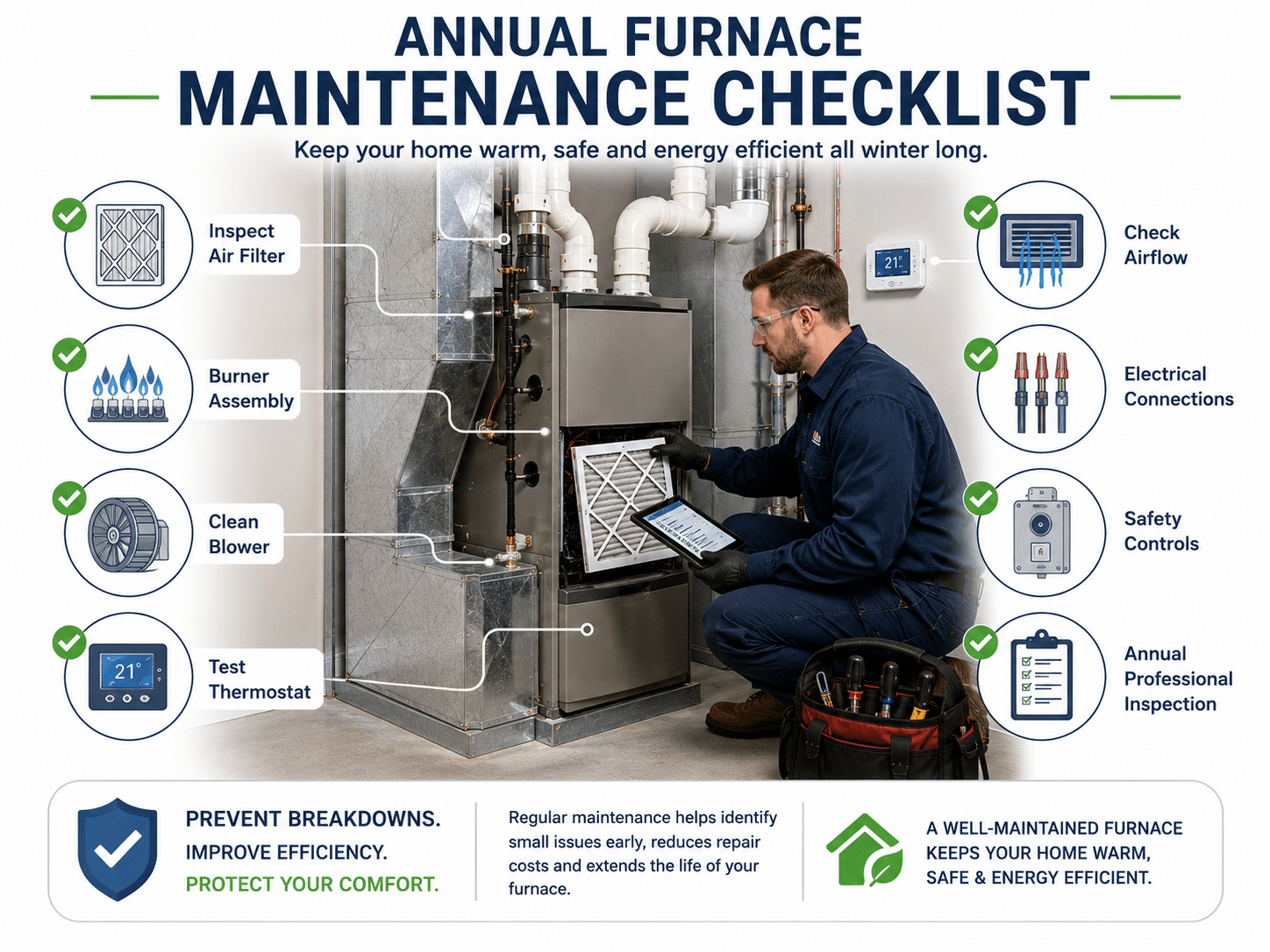
Annual furnace maintenance offers several important benefits:
- Improves energy efficiency. A clean, properly adjusted furnace doesn’t have to work as hard to heat your home, which can help reduce energy consumption.
- Extends the lifespan of your furnace. Routine servicing helps minimize wear on critical components such as the blower motor, ignition system, and burners.
- Reduces the risk of unexpected breakdowns. Technicians can identify worn or failing parts before they cause your furnace to stop working during winter.
- Supports more consistent indoor comfort. Proper maintenance helps improve airflow and ensures your heating system distributes warm air more evenly throughout your home.
- Enhances system safety. Annual inspections include checking key safety components and verifying that the furnace is operating as intended.
- May help protect your manufacturer’s warranty. Many equipment manufacturers recommend or require regular professional maintenance to support warranty coverage.
Preventive maintenance is often less expensive than emergency repairs. Having your furnace inspected before winter gives technicians the opportunity to address developing issues before your heating system is placed under its heaviest seasonal workload.
Why Burnaby Homeowners Shouldn’t Wait Until Winter
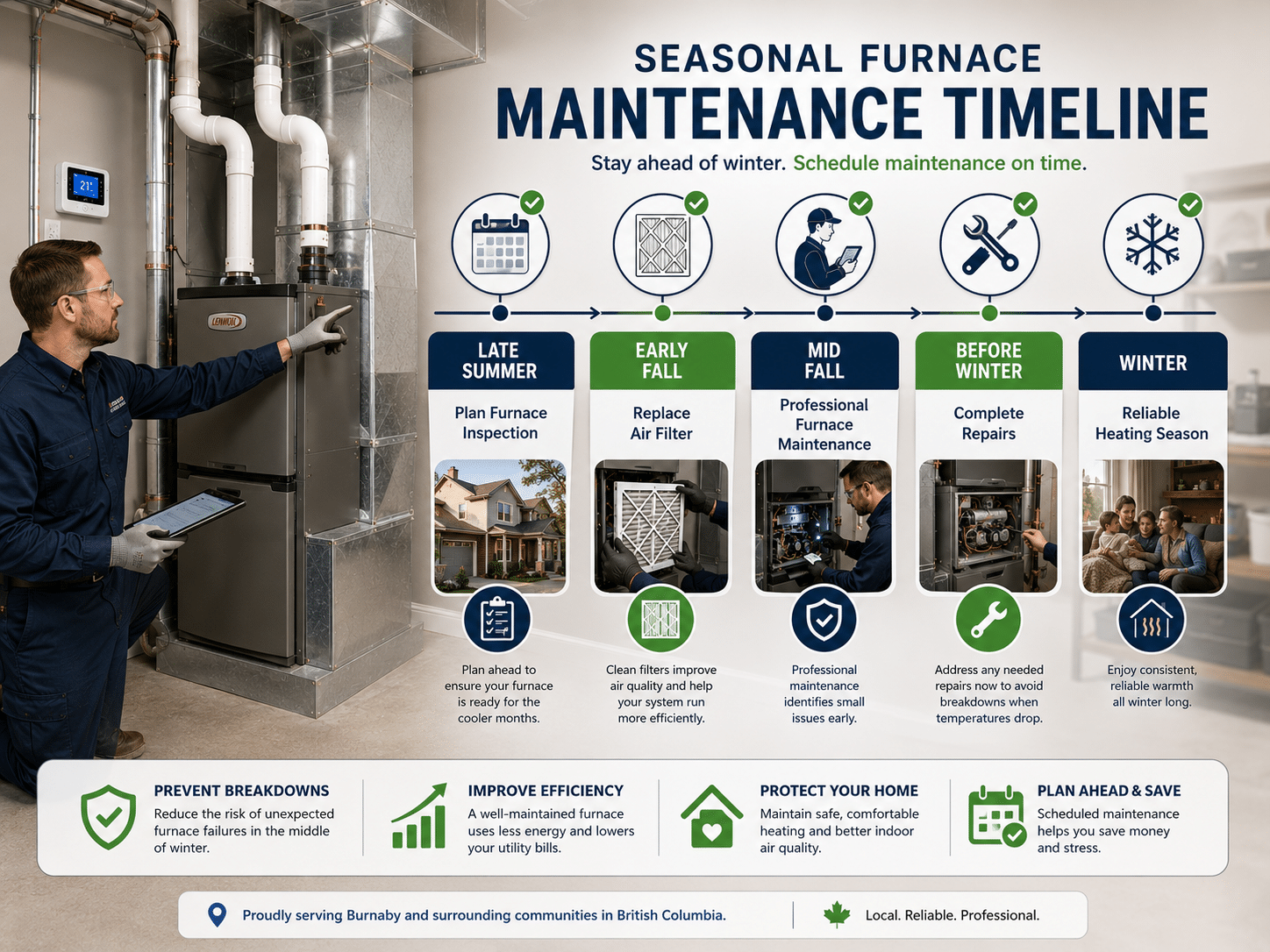
Burnaby homeowners depend on their furnaces to provide consistent, reliable heat throughout the colder months. Waiting until temperatures drop before addressing potential furnace problems can increase the likelihood of unexpected breakdowns when your heating system is needed most. Even minor issues that seem manageable in early fall can quickly become larger repairs once the furnace begins operating for longer periods each day.
Another reason to plan ahead is seasonal demand. As colder weather arrives across the Lower Mainland, HVAC companies often experience a surge in service calls for heating repairs. During these busy periods, appointment availability may be more limited, particularly following extended cold spells. Scheduling an inspection before winter allows potential issues to be identified and repaired before peak demand begins.
Proactive maintenance also gives homeowners greater confidence that their heating system is operating efficiently and safely. Whether your furnace is showing unusual noises, uneven heating, weak airflow, or other furnace repair signs, addressing the problem early can help reduce the risk of emergency repairs, improve energy efficiency, and support more reliable performance throughout the heating season.
For many Burnaby households, a pre-winter furnace inspection is a practical part of seasonal home maintenance. Taking action before colder weather arrives can help you avoid unnecessary inconvenience while ensuring your home stays comfortable when outdoor temperatures begin to fall.
Conclusion
Recognizing furnace repair signs early can help you avoid unexpected heating failures, improve energy efficiency, and maintain a safe, comfortable home throughout the winter. Whether you’ve noticed unusual noises, uneven heating, weak airflow, rising energy bills, or frequent cycling, addressing these issues promptly can prevent more extensive repairs and extend the life of your heating system.
If simple furnace troubleshooting doesn’t resolve the problem, it’s best to have your system inspected before colder weather arrives. Professional maintenance and timely repairs can improve reliability while reducing the risk of emergency breakdowns during Burnaby’s busiest heating season.
Need Professional Furnace Repair?
If your furnace is showing any of these warning signs, the team at Canadian Pacific Heating & Cooling is here to help. Schedule a professional furnace inspection or repair before winter to keep your home warm, safe, and energy-efficient throughout the heating season.