Furnace installation cost in BC can vary considerably from one home to another because the total price depends on more than the furnace itself. Equipment type, heating capacity, efficiency, existing ductwork, venting, and the complexity of the installation can all affect the final project cost.
For homeowners, understanding these factors makes it easier to compare furnace options and installation quotes without focusing only on the equipment price. A properly selected and installed furnace also needs to suit the home’s heating requirements and existing HVAC setup.
This article explains what influences furnace installation costs in British Columbia, what is typically included in an installation, how a high-efficiency furnace can affect the project, and what additional work may be required. It also covers how to evaluate repair versus replacement and what to look for when comparing furnace installation quotes.
How Much Does Furnace Installation Cost in BC?
Furnace installation cost in BC depends on the furnace selected and the work required to install it properly. A straightforward replacement may involve removing the existing unit and connecting the new furnace to compatible ductwork, venting, gas, electrical, and control systems. Other homes may require additional modifications before the new equipment can be commissioned.
The furnace itself is only one part of the project. Homeowners should consider installation labour, removal and disposal of the existing unit, required materials, system connections, venting, and final testing when comparing prices. This is why an advertised new furnace price may not represent the complete installed cost.
What Is Included in a Furnace Installation?
A professional installation may include:
- Furnace equipment and required installation materials
- Removal of the existing furnace, when applicable
- Connections to compatible ductwork and other system components
- Required venting and condensate arrangements
- Electrical and gas connections as applicable
- Thermostat or control setup
- System testing and commissioning
The exact scope depends on the home’s existing HVAC configuration and the furnace being installed. A property assessment helps identify these requirements before the final installation proposal is prepared.
What Factors Affect Furnace Installation Cost?
Several factors can influence the final installation price, even when two homes appear to need similar furnace replacements. The most important considerations include:
- Furnace size and heating capacity: The appropriate capacity depends on the home’s heating requirements, not simply its floor area. Oversizing a furnace can lead to inefficient cycling and inconsistent comfort.
- Home insulation and building envelope: Insulation levels, windows, and other characteristics of the home affect its heating demand and the furnace capacity required.
- Furnace efficiency: A high-efficiency furnace may have different equipment and installation requirements than a lower-efficiency model. Efficiency should be considered alongside expected energy use and the home’s heating needs.
- Existing ductwork: Ductwork that is damaged, poorly configured, or incompatible with the new furnace may require modification or repair.
- Venting requirements: Different furnace configurations can have different venting needs, which may affect installation work and materials.
- Installation complexity: Furnace location, accessibility, mechanical-room space, and the condition of existing connections can all influence labour and installation requirements.
A proper assessment helps identify these factors before homeowners compare complete installation proposals.
How Much Does a New Furnace Cost Compared With Installation?
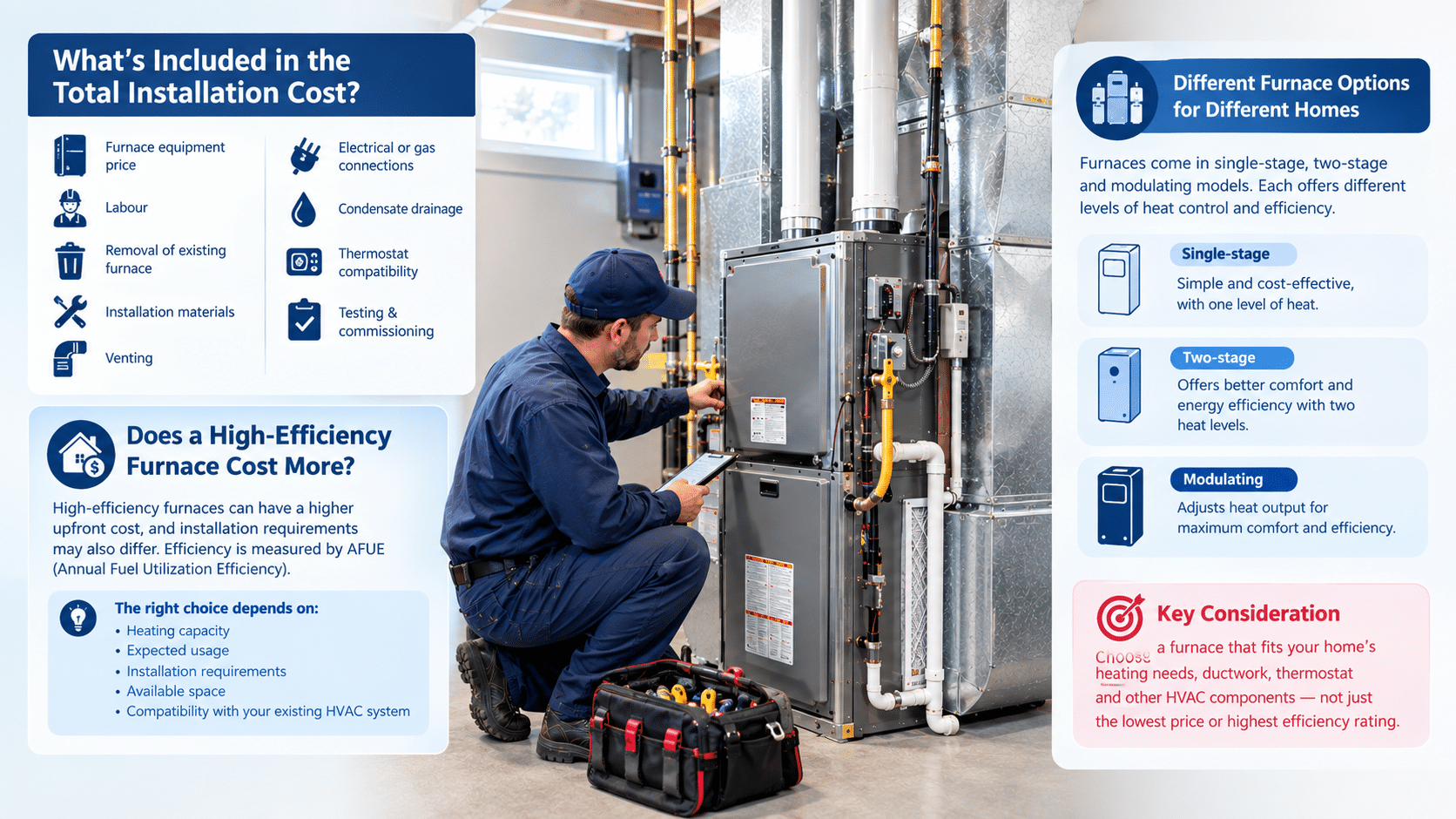
A new furnace price is only one part of the total furnace installation cost. The equipment itself may represent a significant portion of the project, but the final installed price can also include labour, removal of the existing furnace, installation materials, venting, electrical or gas connections, condensate drainage, thermostat compatibility, testing, and commissioning.
This is why comparing furnace prices online can be misleading. Two furnaces with similar equipment prices may require very different installation work depending on the home and existing HVAC setup. A straightforward replacement may involve fewer modifications, while a new high-efficiency furnace could require changes to venting or condensate drainage.
Does a High-Efficiency Furnace Cost More?
High-efficiency furnaces can have a higher upfront equipment cost, and installation requirements may also differ from those of less-efficient models. Efficiency is commonly expressed using AFUE (Annual Fuel Utilization Efficiency), which indicates how efficiently a furnace converts fuel into usable heat.
The right choice depends on more than the efficiency rating alone. Homeowners should consider the furnace’s heating capacity, expected usage, installation requirements, available space, and compatibility with the existing HVAC system. A professional assessment can help determine which combination of furnace type and efficiency is appropriate for the property.
Are There Different Furnace Options for Different Homes?
Furnaces are available with different operating designs, including single-stage, two-stage, and modulating models. These systems can differ in how they deliver heat and control furnace operation.
Rather than choosing a furnace based solely on its advertised price or efficiency rating, homeowners should consider how the equipment will work with the home’s heating requirements, ductwork, thermostat, and other HVAC components. The goal is to select a properly sized system that provides reliable heating without paying for equipment or installation features the home does not need.
Other Costs to Consider When Installing a Furnace
The furnace itself is not always the only cost involved in a replacement. The condition of the existing HVAC system, the furnace location, and the requirements of the new equipment can all affect the final installation price. Understanding these potential costs can help homeowners compare quotes more accurately.
Common additional costs may include:
- Existing furnace removal: Removing and disposing of the old equipment may be included in the installation quote, but homeowners should confirm this.
- Ductwork modifications: Damaged, poorly configured, or incompatible ductwork may need repair, sealing, or modification to work properly with the new furnace.
- Venting changes: Some furnace models have different venting requirements, particularly high-efficiency systems.
- Condensate drainage: High-efficiency furnaces produce condensate that requires an appropriate drainage setup.
- Electrical or gas modifications: Changes may occasionally be needed to accommodate the selected equipment or meet installation requirements.
- Thermostat or control upgrades: A new furnace may require compatible controls or provide an opportunity to upgrade the existing thermostat.
A lower equipment price does not necessarily mean a lower project cost. When comparing furnace installation quotes, homeowners should look at the complete scope of work—including materials, modifications, removal, testing, and commissioning—rather than comparing furnace prices alone.
Should You Repair Your Furnace or Replace It?
Furnace replacement is not automatically the right choice whenever a system develops a problem. A repair may be practical when the issue is relatively minor and the furnace is otherwise reliable and performing properly. Replacement becomes a more relevant consideration when problems are recurring or the system is becoming increasingly difficult or expensive to maintain.
Signs Your Furnace May Need Replacement
Consider discussing replacement when you notice several of these conditions:
- Frequent or recurring furnace repairs
- Increasing repair costs
- Inconsistent or inadequate heating
- Unusual noises or operating behaviour
- Declining system efficiency
- An aging furnace with a history of breakdowns
- Difficulty maintaining comfortable temperatures throughout the home
When Furnace Repair May Still Make Sense
A repair can make sense when a relatively minor component has failed and the rest of the system remains in good condition. For example, replacing a faulty component may restore reliable operation without requiring a complete furnace replacement.
How Furnace Age Fits Into the Decision
Age is useful context, but it should not be the only reason to replace a furnace. Homeowners should also consider the system’s condition, repair history, heating performance, efficiency, reliability, and the likely cost of future repairs. An HVAC assessment can help determine whether repairing the existing furnace or planning a replacement is more appropriate.
How to Choose the Right Furnace for Your BC Home
Choosing a furnace involves more than selecting the highest efficiency rating or replacing the existing unit with one of the same size. The new system should match the home’s heating requirements and work properly with the existing HVAC infrastructure.
Choose the Correct Furnace Size
Furnace capacity should be based on the home’s heating requirements, not simply the size of the existing furnace. Factors such as the home’s size, insulation, windows, layout, and overall building envelope can influence the required capacity. An incorrect sized furnace may affect comfort, cycling, and system performance.
Consider Furnace Efficiency
Efficiency can affect both the initial equipment cost and ongoing fuel use. Homeowners should consider the furnace’s AFUE rating alongside expected heating demand and installation requirements rather than selecting a model based on efficiency alone.
Consider Your Existing HVAC System
The new furnace may need to work with existing:
- Ductwork
- Thermostat and controls
- Air conditioning system
- Heat pump
- Venting and condensate configuration
Compatibility should be confirmed before equipment is selected.
Consider Long-Term Ownership Costs
The initial furnace installation cost is only part of the ownership equation. Energy use, routine furnace maintenance, potential repairs, warranty coverage, and expected service life can all influence the overall value of a replacement system.
How to Compare Furnace Installation Quotes
A furnace installation quote should make it clear what the homeowner is actually receiving for the quoted price. Two proposals may look similar at first but include different equipment, installation materials, modifications, or warranty coverage. Comparing the complete scope of work makes it easier to understand the differences.
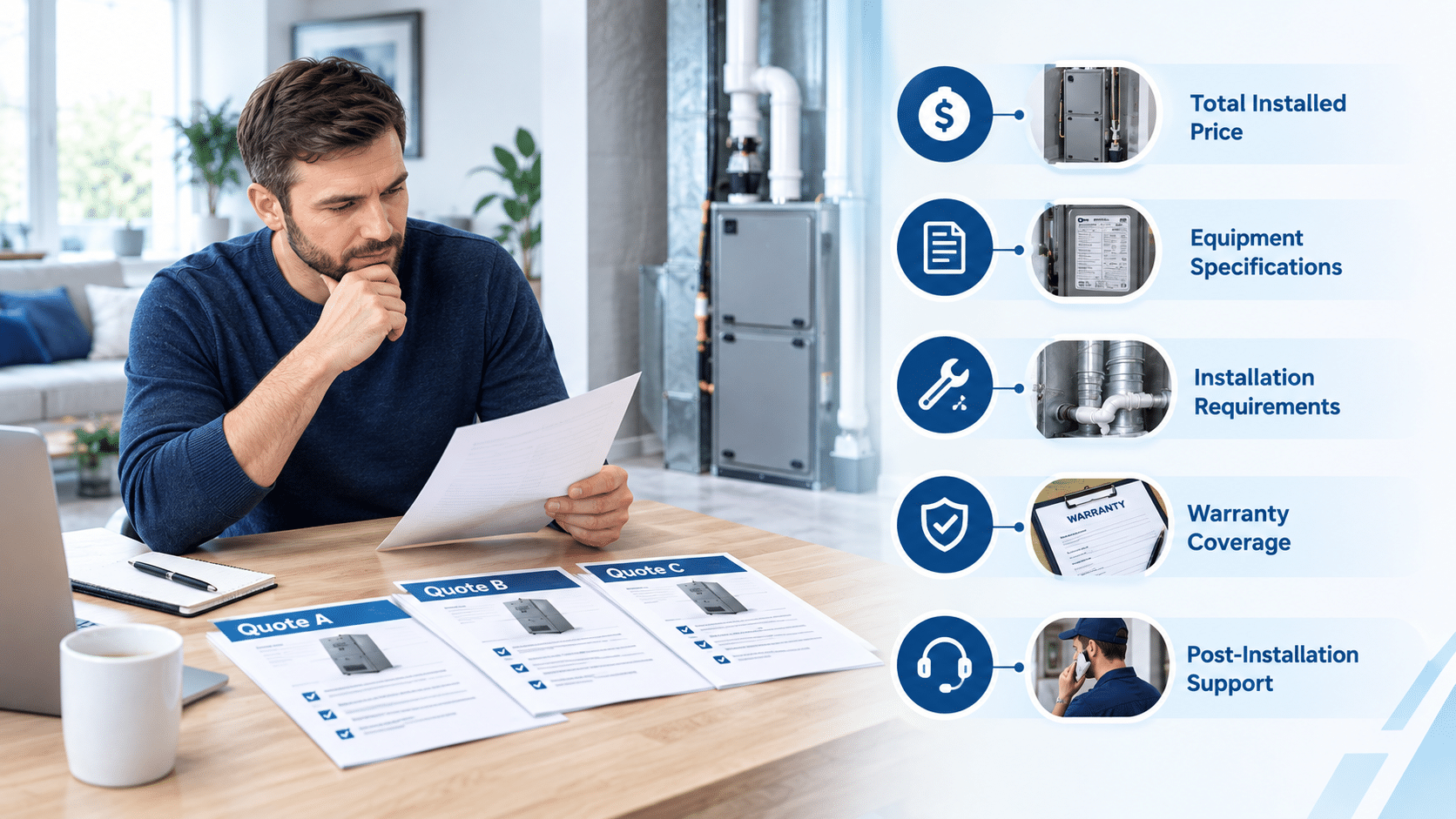
- Compare the complete installed price. Check whether the quote includes the furnace, labour, removal and disposal of the existing unit, installation materials, required modifications, testing, and commissioning.
- Check the furnace specifications. The proposal should identify the furnace model, heating capacity, efficiency rating, and other relevant equipment details.
- Ask about required installation work. Confirm whether the project requires changes to ductwork, venting, electrical connections, gas connections, condensate drainage, or thermostat controls.
- Review warranty coverage. Look for details about the manufacturer’s equipment warranty and any available installation or workmanship coverage.
- Ask about post-installation support. Find out who to contact if an issue develops after installation and what maintenance the manufacturer or installer recommends.
A professional quote should give you enough information to understand both the equipment and the work involved. If a proposal only provides a furnace model and a single total price, ask for the installation scope to be explained before comparing it with other quotes.
Why Professional Furnace Installation Matters
A furnace replacement involves more than connecting a new heating appliance to the existing system. Professional installation helps ensure the equipment is properly matched to the home’s heating requirements and correctly integrated with the existing ductwork, venting, electrical components, gas connections, and controls.
Proper furnace sizing is particularly important. Simply installing a furnace with the same capacity as the old unit does not necessarily mean it is the right choice. Home size, insulation, windows, layout, and other heating requirements can affect the appropriate capacity. An improperly sized furnace may cycle too frequently or struggle to maintain consistent comfort.
Installation also requires attention to safe system connections. Depending on the equipment and home, this can include gas connections, electrical components, venting, condensate drainage, and thermostat or control wiring. High-efficiency equipment may have additional venting and condensate requirements that differ from an older furnace.
Finally, professional installation should include testing and commissioning. The system should be checked after installation to confirm that it operates correctly and that the furnace, controls, airflow, and safety-related components are functioning as intended. This final step helps ensure the homeowner receives a complete installation rather than simply having new equipment placed in the existing system.
When Should You Get a Professional Furnace Installation Quote?
A professional furnace installation quote can be useful when the existing system is becoming unreliable, its heating performance has changed, or you are planning a broader HVAC upgrade. An assessment can help determine whether replacement is appropriate and what installation work the home may require.
Consider getting an installation assessment when:
- Your furnace is reaching the end of its service life: Older equipment may warrant a closer look, particularly when reliability or efficiency has declined.
- Repair costs are becoming frequent: Multiple repairs over time can make it useful to compare continued repair with replacement.
- Your home is no longer heating consistently: Uneven temperatures, repeated cycling, or inadequate heating may indicate equipment, sizing, airflow, or ductwork concerns.
- You are planning a renovation: Changes to the home’s layout, insulation, or mechanical space can affect heating requirements and equipment selection.
- You want to improve heating efficiency: A replacement assessment can help compare available efficiency levels with your home’s actual heating needs.
An in-home assessment can also identify installation requirements that are difficult to determine from the furnace model alone, helping you understand the likely scope of the project before comparing quotes.
Conclusion: Understanding Furnace Installation Cost in BC
Furnace installation cost in BC depends on much more than the price of the furnace itself. Equipment efficiency, heating capacity, existing ductwork, venting, installation complexity, removal requirements, and system compatibility can all affect the final project cost. That is why comparing equipment prices alone may not give homeowners an accurate picture of the investment.
The right furnace should be appropriately sized for the home and compatible with its existing HVAC infrastructure. Homeowners should also compare complete installation proposals, including labour, required modifications, testing, warranty coverage, and post-installation support.
If your furnace is aging, requiring frequent repairs, or no longer heating your home consistently, a professional assessment can help clarify whether repair or replacement makes sense.