To prepare your HVAC for winter, start by checking the furnace filter, thermostat, vents, and accessible areas around your heating equipment. Test the system before colder weather arrives and pay attention to unusual noises, odours, weak airflow, or uneven heating.
Winter places greater demand on your heating system, so problems that seem minor during mild weather can become more noticeable when the furnace runs frequently. A dirty filter, blocked vent, or developing equipment issue can affect comfort and system performance when you need reliable heat most.
This winter HVAC checklist covers the practical steps homeowners can take before the heating season, including furnace preparation, basic airflow checks, system testing, warning signs that may require professional attention, and ways to support efficient winter heating.
Why You Should Prepare Your HVAC System Before Winter
Canadian winter weather can place greater demand on a home’s heating system, particularly when the furnace needs to operate more frequently to maintain a comfortable indoor temperature. Preparing your HVAC system before colder weather arrives gives you an opportunity to check for obvious issues before reliable heating becomes essential. It can also help identify airflow or performance concerns that may otherwise go unnoticed.
Winter Puts More Demand on Your Heating System
During colder weather, your heating system may run for longer periods and more often than it does during milder conditions. A system with restricted airflow, a neglected filter, or an existing mechanical issue may have more difficulty maintaining consistent indoor temperatures when demand increases. Preparing your HVAC for winter does not guarantee that a system will never experience a problem, but it can help you spot concerns before they become more disruptive.
Small HVAC Problems Can Become Bigger Problems
Changes in heating performance are worth paying attention to before winter is fully underway. Weak airflow, rooms that remain noticeably colder than others, unusual furnace noises, frequent cycling, or other changes in normal operation can indicate that the system needs attention. Addressing these signs early can give homeowners more time to determine whether a simple maintenance task is appropriate or whether professional HVAC service is needed.
Your Winter HVAC Checklist
A good winter HVAC checklist starts with the simple things homeowners can safely inspect themselves. Before the heating season gets underway, work through these basic checks to make sure your system is ready for regular use.
Check or Replace Your Furnace Filter
Inspect the furnace filter and replace it if it is dirty, following the filter manufacturer’s recommendations. A restricted filter can reduce airflow and make it harder for your heating system to distribute warm air effectively. Filter types and replacement needs vary, so avoid assuming that every household requires the same schedule.
Check Your Thermostat
Make sure the thermostat is set to heating mode and responds when you adjust the temperature. If your thermostat uses batteries, check them as part of your preparation. A properly functioning thermostat helps your heating system respond when indoor temperatures fall below the selected setting.
Clear Vents, Registers and Return-Air Openings
Walk through the home and make sure supply registers and return-air openings are not blocked by furniture, rugs, curtains, or stored items. Good airflow is important for consistent heating, so avoid using closed vents as a way to redirect heat from one room to another.
Keep the Furnace Area Clear
Keep the area around the furnace accessible and free of unnecessary items. Follow the equipment manufacturer’s clearance requirements and avoid storing inappropriate or combustible materials near heating equipment. A basic visual check can also help you notice anything that appears damaged or unusual.
Check Outdoor HVAC Equipment
If your heating system has an outdoor component, such as a heat pump, check that the area around it is free from obvious debris or obstructions. Maintain the clearances specified by the manufacturer, and leave repairs or equipment disassembly to a qualified HVAC professional.
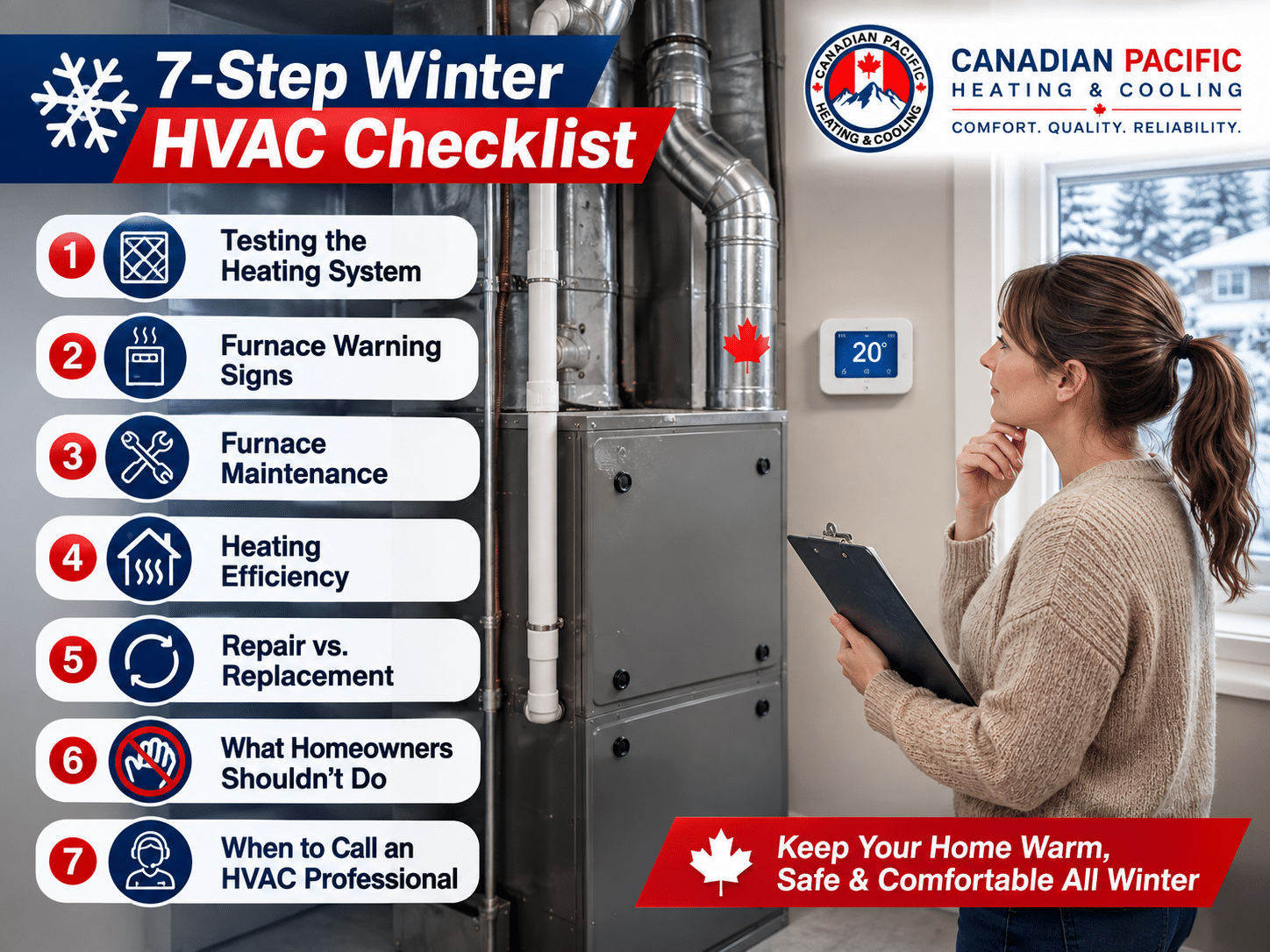
Test Your Heating System Before Cold Weather Arrives
Testing your heating system before the coldest weather arrives can help you discover an issue when you still have time to address it. Rather than waiting until the first genuinely cold night, turn the heat on and give the system an opportunity to operate normally. This simple check is an important part of furnace preparation and can reveal changes in performance that may need attention.
Check for Normal Heating Operation
Set your thermostat to a temperature that calls for heat and confirm that the system starts as expected. Once it is running, check whether warm air is reaching the rooms where it is needed. Pay attention to unusual sounds, persistent odours, repeated starts and stops, or other behaviour that differs from what you normally experience.
A heating system can sound different during startup than it does during continuous operation, so focus on persistent or unusual changes rather than trying to diagnose the cause yourself.
Look for Uneven Heating
Notice whether some rooms remain significantly colder than others even after the system has been running. Weak airflow from individual registers, persistent cold areas, or noticeable temperature differences between floors can have several possible causes, including airflow restrictions, ductwork issues, thermostat problems, or equipment performance concerns.
If uneven heating persists despite basic checks such as clearing vents and checking the filter, professional evaluation can help determine the underlying cause.
Signs Your Furnace May Need Professional Attention
Some furnace problems are easy to notice but difficult to diagnose safely without the right equipment and experience. If your heating system behaves differently from normal, it is better to identify the warning sign and arrange an appropriate assessment rather than repeatedly resetting or attempting to repair the equipment yourself.
Watch for These Warning Signs
- Unusual furnace noises: Banging, rattling, grinding, squealing, or other persistent sounds can indicate a component or operating problem.
- Frequent cycling: A furnace that repeatedly starts and stops may not be operating as it should and should be assessed if the behaviour continues.
- Weak airflow: Noticeably reduced airflow from registers can affect comfort and may have several possible causes beyond a dirty filter.
- Uneven heating: Rooms that consistently remain much colder than others may point to an airflow, ductwork, thermostat, or equipment issue.
- Unusual odours: Persistent or unexpected smells during heating operation should not simply be ignored, particularly when accompanied by other changes in performance.
- Repeated breakdowns: If the furnace needs repeated resets or has developed recurring problems, professional diagnosis can help identify the underlying issue.
- Safety concerns: Suspected gas, combustion, electrical, or other safety-related problems require professional attention rather than homeowner troubleshooting.
A furnace symptom does not always identify its cause. For example, weak airflow may result from more than the filter alone, so repeated filter replacement is not a substitute for proper diagnosis when the problem persists.
Should You Schedule Furnace Maintenance Before Winter?
Pre-season furnace maintenance can be worthwhile, particularly if your heating system has not been serviced recently or has started showing changes in performance. Having the system checked before winter allows potential issues to be identified before the furnace is operating regularly under heavier heating demand. It can also give homeowners a better understanding of the condition and performance of their heating equipment.
What Professional Furnace Maintenance Can Check
A professional HVAC service visit can assess the system’s overall operation and look for signs of wear or developing problems. Depending on the equipment and service required, this may include checking airflow, components and connections, safety-related operation, filter condition, and general heating performance. The exact maintenance process can vary according to the furnace type, manufacturer requirements, and condition of the equipment.
When Professional Maintenance Makes Sense
Consider arranging a professional check if the furnace has not been maintained recently, has a history of repairs, or is showing symptoms such as unusual noises, frequent cycling, uneven heating, or reduced performance. Professional maintenance can also make sense when you want to identify potential concerns before the heating system becomes essential during colder weather.
Seasonal maintenance is proactive, while furnace repair addresses an existing problem. If your system is already showing unusual symptoms, describe those symptoms to the HVAC professional rather than treating routine maintenance as a substitute for diagnosis.
How to Improve Winter Heating Efficiency
Preparing your HVAC system for winter is only part of keeping your home comfortable and using heating energy effectively. The condition of the home’s airflow, thermostat settings, and building envelope can also influence how well heat is distributed and retained. A few practical checks can help support more consistent winter comfort.
Keep Airflow Unrestricted
Start by keeping the furnace filter, supply registers, and return-air openings in good condition. A dirty filter or blocked airflow path can interfere with how effectively heated air moves through the home. Avoid covering vents with furniture or other household items, and make sure return-air openings remain accessible.
Use Your Thermostat Effectively
Use the thermostat according to the manufacturer’s instructions and choose temperature settings that provide comfortable conditions without unnecessary heating. If you notice that the system runs continuously, struggles to reach the selected temperature, or produces inconsistent temperatures, the issue may require more than a thermostat adjustment.
Address Drafts and Heat Loss
Your heating system is not the only factor affecting winter comfort. Drafts around doors and windows, inadequate insulation, and other sources of air leakage can allow heated air to escape. Addressing these issues can complement proper HVAC maintenance and help your heating system maintain comfortable indoor temperatures more consistently.
When Should You Repair or Replace Your Furnace?
Winter preparation can sometimes reveal that a furnace is no longer performing reliably. The right choice between repair and replacement depends on the condition of the equipment, the nature of the problem, its repair history, and the homeowner’s longer-term heating needs. There is no single age or repair-cost threshold that applies to every furnace.
When Furnace Repair May Make Sense
Repair may be a reasonable option when the problem is isolated and the furnace is otherwise operating reliably. The overall condition of the system, expected service life, repair history, and availability of appropriate replacement components are useful factors to consider. A professional diagnosis can help determine whether the current issue is repairable and whether continuing to use the existing equipment makes practical sense.
When Furnace Replacement May Be Worth Considering
Replacement may deserve consideration when a furnace has become increasingly unreliable, requires repeated repairs, or continues to have performance problems despite previous service. Homeowners may also want to consider replacement when evaluating their longer-term heating requirements rather than making another short-term repair.
A repair decision should be based on more than the age of the furnace alone. The equipment’s condition, reliability, repair history, performance, and the homeowner’s future plans all matter when comparing another repair with replacement.
What Homeowners Should Not Do Themselves
Basic winter preparation is something homeowners can handle, but furnace repairs and safety-critical work are different. Homeowners should avoid opening, modifying, or attempting to repair internal furnace components unless they are properly qualified to do so. A visual inspection and simple maintenance checks are very different from diagnosing or repairing the equipment.
Don’t Attempt Gas or Combustion Repairs
Gas connections, burners, combustion components, electrical controls, and other safety-critical parts require appropriate knowledge and equipment. If you suspect a gas, combustion, or electrical problem, do not attempt to troubleshoot or repair the component yourself. Arrange for qualified HVAC service instead.
Don’t Ignore Warning Signs
Unusual noises, persistent odours, repeated cycling, weak airflow, or other changes in operation should not be treated as something to simply work around. Continuing to operate a system with an unresolved problem can leave the underlying issue unaddressed.
Don’t Assume Every Problem Is a Dirty Filter
A dirty filter can restrict airflow, but it is not the explanation for every heating problem. If replacing a dirty filter does not resolve weak airflow, uneven heating, or other symptoms, further diagnosis may be necessary rather than repeatedly changing the filter.
When to Call an HVAC Professional Before Winter
Some HVAC issues can be identified through basic homeowner checks, but certain symptoms warrant professional attention. Addressing these concerns before winter can help avoid discovering a heating problem when the system is needed most.
Consider contacting an HVAC professional if you notice:
- The furnace will not start: If the system does not respond when there is a call for heat, the cause may require professional diagnosis.
- Repeated cycling: Frequent starting and stopping can indicate an underlying operating problem.
- Unusual noises: Persistent banging, rattling, grinding, squealing, or other unfamiliar sounds should be investigated.
- Weak or inconsistent airflow: Reduced airflow that continues after checking the filter and vents may have another cause.
- Uneven heating: Persistent differences between rooms or floors can point to airflow, ductwork, thermostat, or equipment concerns.
- Repeated breakdowns: Recurring problems may indicate that the system needs more than another temporary fix.
- Safety concerns: Suspected gas, combustion, electrical, or other safety-related problems should be handled by a qualified professional.
If your heating system is already showing one or more of these symptoms, winter preparation is a good opportunity to have the issue assessed rather than waiting for a complete loss of heating.
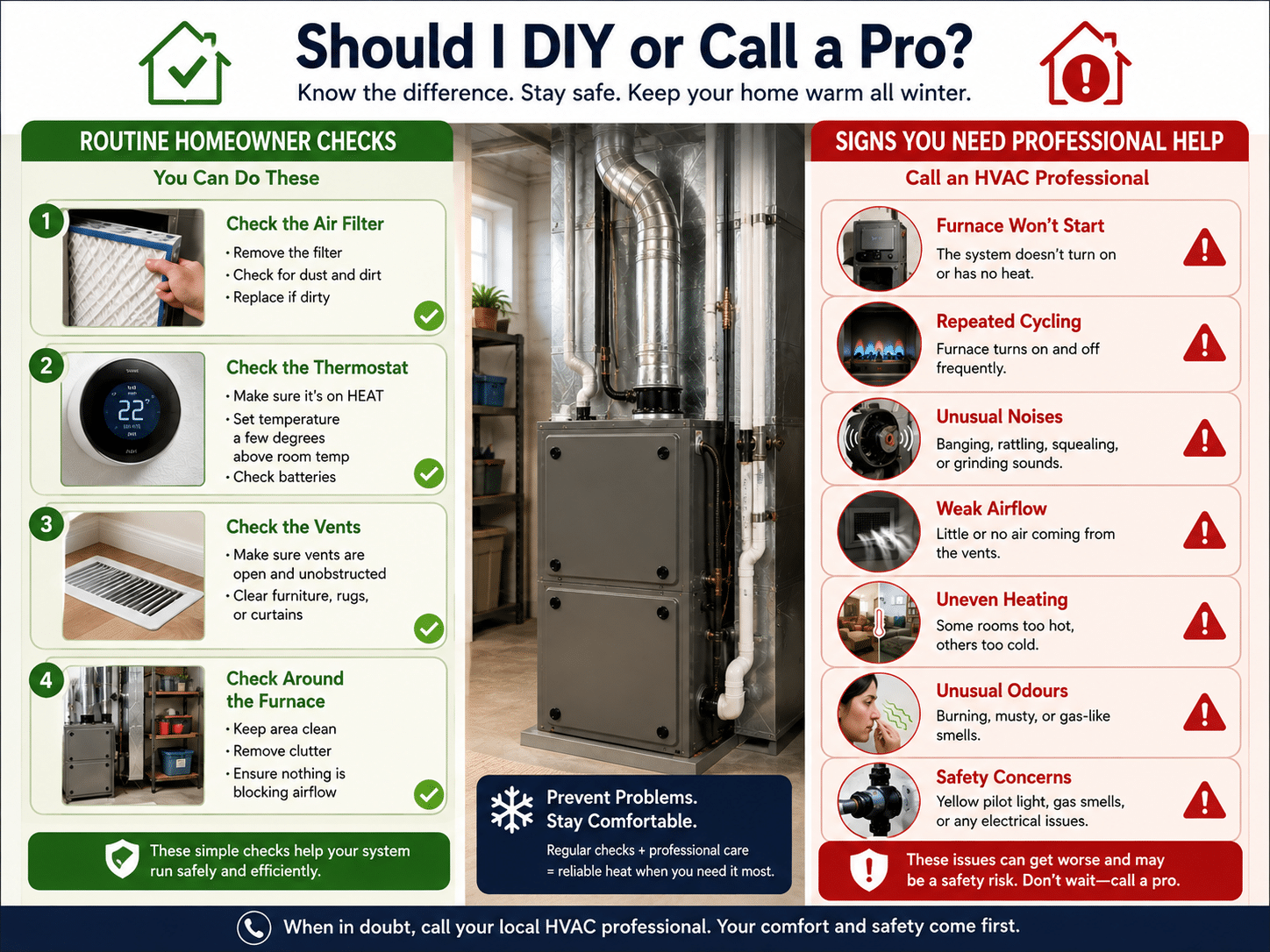
Winter HVAC Preparation Checklist: Quick Reference
Use this quick checklist before colder weather arrives:
- Check or replace the furnace filter if it is dirty or due for replacement.
- Test the thermostat and confirm the heating system responds correctly.
- Clear supply registers and return-air openings of furniture, rugs, curtains, and other obstructions.
- Keep the furnace area clear and follow the manufacturer’s clearance requirements.
- Check outdoor HVAC equipment for visible debris or obstructions if your system has an outdoor component.
- Test the heating system before the coldest weather arrives.
- Listen for unusual sounds or watch for abnormal operation while the system is running.
- Check for uneven heating or weak airflow throughout the home.
- Address persistent warning signs rather than ignoring them.
- Arrange professional HVAC service if the system shows problems that require diagnosis or repair.
Completing these basic checks can help you identify potential concerns before your heating system is working through the most demanding part of the season. The goal is not to diagnose every HVAC problem yourself, but to recognize when your system appears to be operating normally and when further attention may be needed.
Prepare Your HVAC Before Winter Arrives
Preparing your HVAC system before winter does not have to be complicated. Start with the basics: check the furnace filter, thermostat, vents, and accessible equipment areas, then test your heating system before colder weather arrives. Pay attention to unusual noises, weak airflow, uneven heating, or other changes in performance.
If your system has persistent problems or needs maintenance, having it assessed before winter demand increases can help you address concerns earlier. Homeowners should leave gas, combustion, electrical, and other safety-critical work to qualified HVAC professionals.