You turn up the thermostat, but the vents are still blowing cold air. A furnace may deliver cool air briefly during startup or an operating transition, but persistent cold airflow can mean the system is not producing heat properly or the heated air is not being delivered effectively.
When a furnace is not heating, the issue can affect comfort, indoor temperature, and system operation. Causes range from thermostat settings and a dirty filter to ignition problems, safety shutdowns, restricted airflow, or an interrupted power supply. Cold air alone does not identify the failed component, so avoid assuming the cause.
This article explains how to distinguish normal furnace operation from a heating problem, what homeowners can safely check, and when professional furnace troubleshooting or furnace repair is necessary. It also covers warning signs, technician diagnosis, and practical maintenance steps.
Is It Normal for a Furnace to Blow Cold Air?
A furnace may blow cool or room-temperature air briefly during startup, especially before the heat exchanger reaches its operating temperature. Some systems also continue running the blower for a short period after the heating cycle ends to distribute remaining warmth. These situations are generally normal when the airflow is brief and the home continues to warm.
However, if your furnace keeps blowing cold air, the indoor temperature is dropping, or the system runs without producing heat, the issue deserves attention. Persistent cold airflow may indicate a problem with the thermostat, ignition system, flame sensor, airflow, power supply, or another internal component. The airflow itself does not identify the exact cause, so avoid assuming that the furnace needs replacement or attempting repairs without proper knowledge.
Common Reasons Your Furnace Is Blowing Cold Air
Several issues can cause a furnace to blow cold air instead of delivering consistent heat. The thermostat may be set incorrectly, have a weak battery, or fail to send the proper heating signal. A dirty air filter can also restrict airflow, causing the furnace to overheat and shut down its heating cycle while the blower continues running.
In some cases, the furnace may still be completing its startup sequence, or the ignition system may be unable to light the burners. A dirty flame sensor or another safety control problem can cause the system to shut off the burners shortly after ignition. Power interruptions, a tripped breaker, or a switched-off service disconnect may also prevent normal heating operation.
Airflow problems can occur beyond the furnace itself. Blocked return-air grilles, closed supply vents, or damaged ductwork may interfere with air circulation and make the air reaching certain rooms feel cool. Because several different problems can produce similar symptoms, proper furnace troubleshooting is needed before identifying the required repair.
Safe Furnace Troubleshooting: What You Can Check
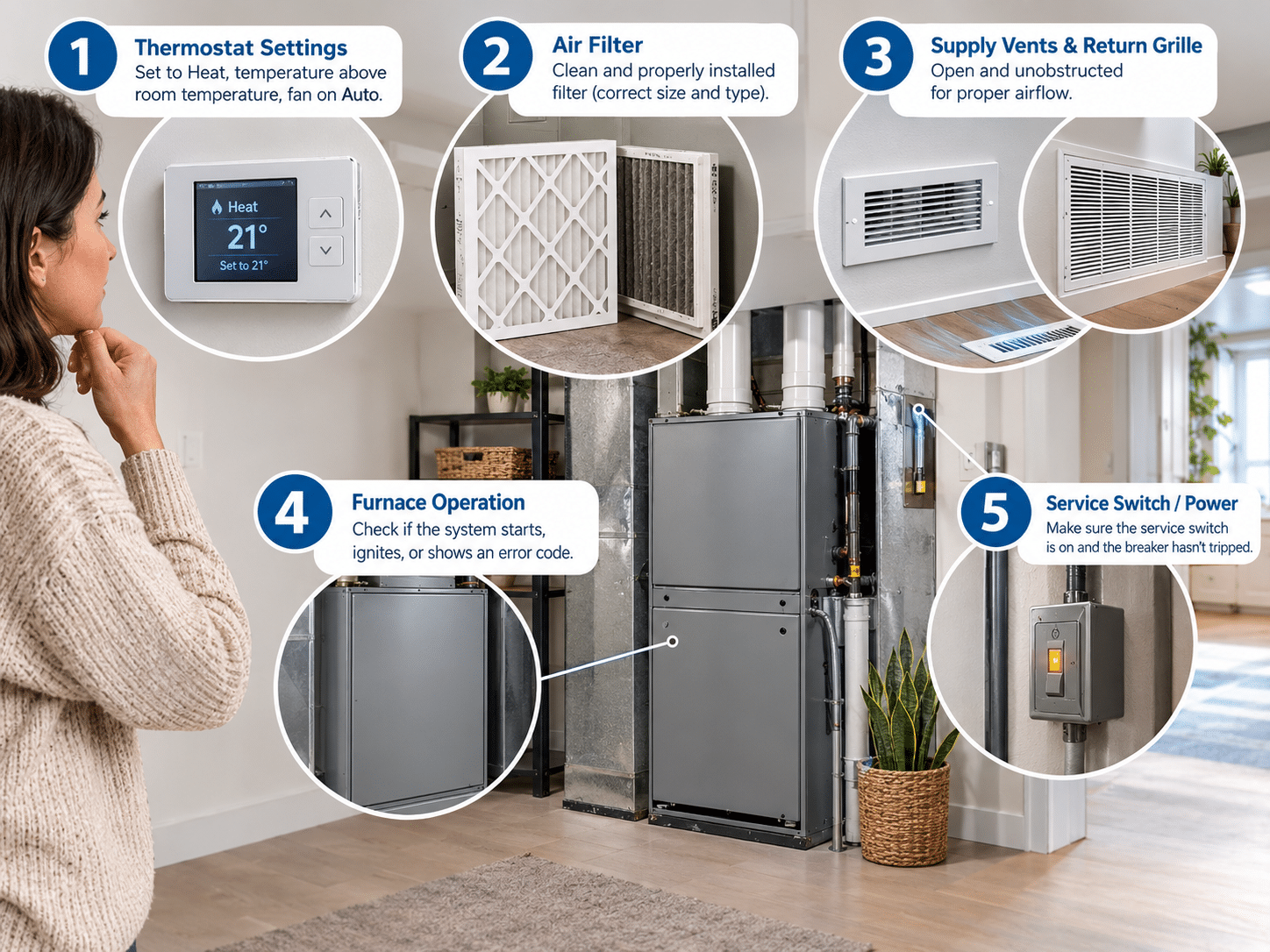
Before arranging furnace repair, you can complete a few basic checks. These steps may resolve a simple issue or provide useful information for a technician.
- Check the thermostat settings. Confirm the thermostat is set to Heat, the temperature is above the current room temperature, and the fan is set to Auto rather than On. If the thermostat uses batteries, check whether they need replacement.
- Inspect the air filter. A heavily clogged filter can restrict airflow and cause the furnace to overheat or shut down its heating cycle. Replace it if it is dirty, using the correct size and type recommended for your system.
- Check supply vents and return grilles. Make sure vents are open and unobstructed. Furniture, rugs, or other objects blocking return-air grilles can interfere with circulation.
- Observe the furnace’s operation. Note whether the system starts, attempts ignition, shuts down quickly, or displays an error code. Record any unusual noises or repeated cycling.
- Check external power controls. Confirm the furnace service switch has not been turned off and that the relevant breaker has not tripped. Do not repeatedly reset a breaker that continues to trip.
Avoid removing access panels, working on gas connections, handling electrical components, or bypassing safety controls. If these basic checks do not resolve the problem, professional troubleshooting is the safer next step.
When to Stop Troubleshooting and Call an HVAC Professional
If your furnace is still blowing cold air after checking the thermostat, filter, vents, and basic power supply, the problem may involve an internal component that requires professional diagnosis. Continuing to restart or adjust the furnace without knowing the cause can make the situation worse, particularly when ignition, electrical, gas, or safety controls are involved.
Professional furnace repair is worth arranging when you notice any of the following:
- The furnace continues blowing cold air during a heating cycle.
- The system repeatedly starts and stops without properly heating the home.
- An error code or diagnostic light keeps appearing.
- The furnace makes unusual banging, rattling, grinding, or clicking sounds.
- The burners do not remain lit or the furnace repeatedly fails to ignite.
- Heating performance remains poor even with a clean filter and unobstructed vents.
- You suspect an issue with the gas supply, electrical components, ignition system, or internal controls.
A technician can determine whether the problem is a relatively simple operating issue or a component that needs repair. This is particularly important when a furnace is running but not producing heat, because cold airflow alone cannot identify which internal part has failed.
Safety Warning: Gas Odours, Carbon Monoxide, or Electrical Concerns
Furnace troubleshooting should stop immediately if you notice a strong gas odour, hear signs of a significant gas leak, see unsafe electrical conditions, or have a carbon monoxide alarm activate. Leave the area when appropriate and follow the emergency instructions provided by your local gas utility or emergency services. Do not attempt to locate a gas leak, repair gas lines, bypass safety controls, or work inside the furnace’s electrical components yourself.
A furnace blowing cold air does not, by itself, mean there is a carbon monoxide problem. However, a carbon monoxide alarm or suspected gas leak should always be treated as a safety emergency rather than a routine furnace repair issue.
How an HVAC Technician Diagnoses a Furnace Blowing Cold Air
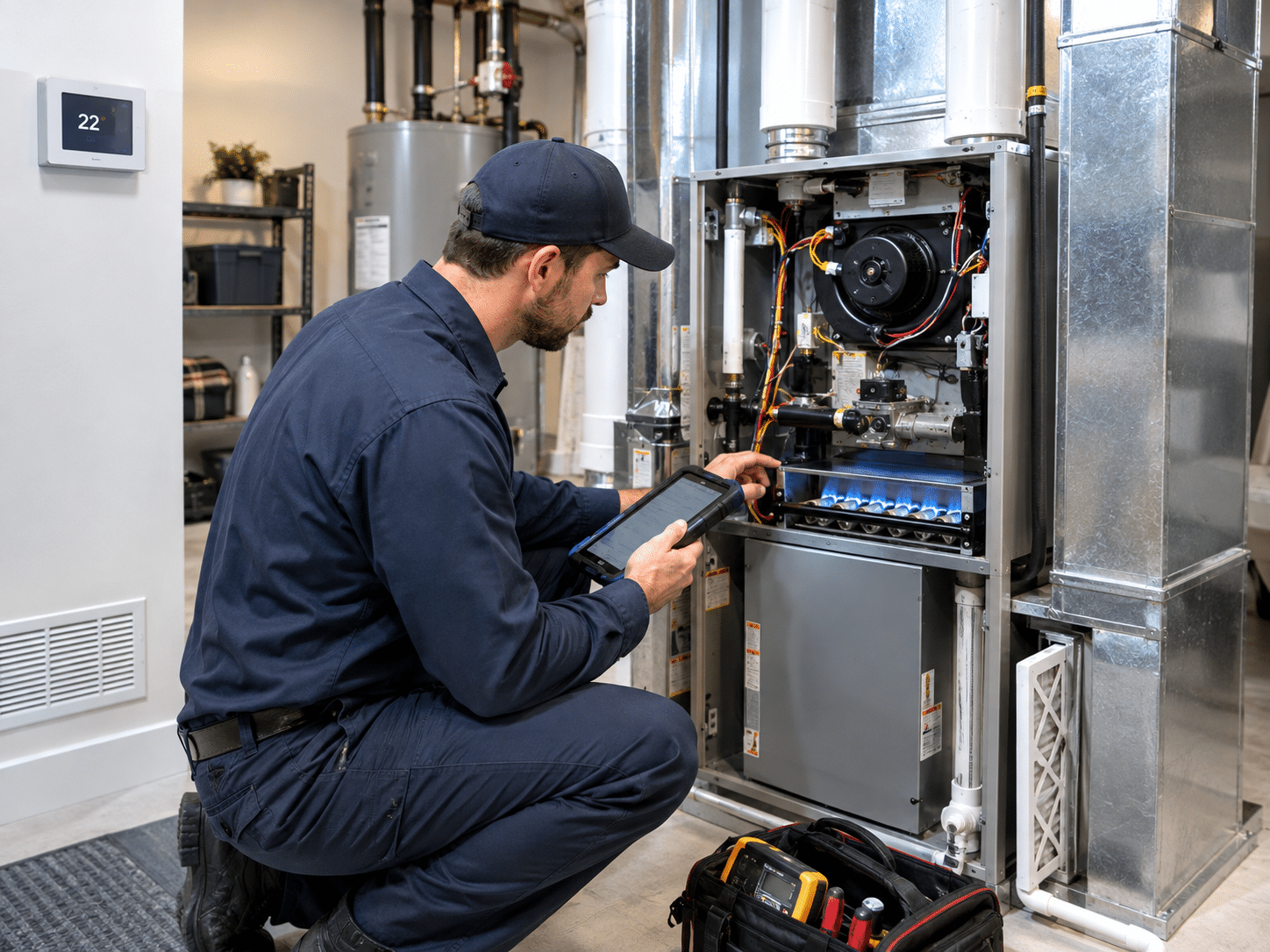
When a furnace is blowing cold air, a technician does more than simply look at the thermostat or replace the filter. The diagnosis usually starts by reproducing the reported problem and checking the furnace’s operating sequence. The goal is to determine whether the furnace is failing to produce heat or whether heated air is being lost or restricted before it reaches the living space.
The technician may check the thermostat’s call for heat, furnace controls, ignition sequence, burners, safety controls, airflow, filter condition, and accessible ductwork. The exact diagnostic process depends on the furnace type and the symptoms observed.
Checking Thermostat Signals and System Operation
The technician first confirms that the thermostat is communicating the correct heating demand to the furnace. They may then observe whether the furnace starts normally and whether each stage of its operating sequence occurs as expected.
This helps distinguish a furnace not heating problem from a control or communication issue. It also gives the technician useful information about when the cold airflow begins and whether the system shuts down during operation.
Inspecting Ignition, Burners, and Safety Controls
If the furnace receives a call for heat but does not produce warm air, the technician can inspect the ignition and burner operation where applicable. They may also check diagnostic indicators and safety controls to determine whether the furnace is shutting the burner down as a protective response.
These checks are important because repeatedly restarting the furnace or bypassing a safety component can create additional risks.
Evaluating Airflow, Filters, and Ductwork
The diagnosis also considers whether the furnace is producing heat but struggling to deliver it effectively. A technician can assess the filter, return-air pathway, supply airflow, and accessible ductwork for restrictions or other problems.
This distinction matters: poor airflow does not always mean the furnace itself has failed. A furnace may be operating correctly while a delivery problem prevents sufficient heated air from reaching parts of the home.
How to Prevent Furnace Heating Problems
Preventing every furnace problem is not possible, but regular attention can help identify airflow and operating issues before they become disruptive. For Burnaby homeowners, practical maintenance starts with the simple things you can monitor yourself and continues with professional inspection of the equipment.
Replace or Check the Air Filter Regularly
A furnace filter should be checked regularly and replaced according to the filter manufacturer’s guidance and the conditions inside the home. Homes with pets, renovation activity, or higher dust levels may require more frequent filter changes.
Always use the correct filter size and specification for your furnace. A filter that is too restrictive or installed incorrectly can affect airflow and furnace performance.
Schedule Professional Furnace Maintenance
Professional HVAC maintenance allows a technician to inspect operating components, safety controls, airflow, and overall furnace performance. Maintenance does not guarantee that a furnace will never break down, but it can help identify developing issues before they become more disruptive.
For older systems, regular maintenance can also provide useful information about recurring problems and overall operating condition.
Pay Attention to Early Warning Signs
Small changes in furnace performance are worth noticing, especially if they happen repeatedly. Contact a professional if you notice:
- Uneven heating between rooms
- Unusual furnace noises
- Frequent or repeated cycling
- Persistent changes in airflow
- Increasing need to adjust the thermostat
- Reduced heating performance
A furnace that gradually becomes less reliable should not only be assessed when it stops working completely. Addressing recurring symptoms early can help homeowners understand whether the system needs maintenance, repair, or further evaluation.
Conclusion: What to Do When Your Furnace Blows Cold Air
A furnace blowing cold air is not always a sign of a major failure. A brief period of cool airflow can occur during startup or a normal operating transition. However, if the furnace continues to blow cold air or the home is not reaching the thermostat setting, the problem deserves attention.
Start with safe furnace troubleshooting: check the thermostat mode and temperature, inspect the filter, make sure vents and return grilles are unobstructed, and look for obvious power interruptions. Avoid opening the furnace, adjusting gas components, bypassing safety controls, or attempting internal electrical or ignition repairs.
If the furnace is still not heating after these basic checks, professional diagnosis can identify whether the issue involves ignition, airflow, safety controls, the thermostat, or another component. For homeowners experiencing ongoing furnace problems, Canadian Pacific Heating & Cooling provides furnace repair and HVAC services in Burnaby to help identify the cause and restore dependable home heating.