Most residential air conditioners should receive professional AC maintenance once a year, ideally before the main cooling season begins. Annual servicing gives an HVAC professional an opportunity to inspect the system, check key components, evaluate airflow, and identify developing problems before they interfere with your comfort.
Regular maintenance matters because an air conditioner can still produce cool air while operating less effectively than it should. Restricted airflow, worn components, or other developing issues may gradually affect cooling performance and increase strain on the system. Routine care can help keep your equipment operating properly and ready for periods of heavier use.
In this article, we’ll explain how often your AC should be serviced, why spring is a practical time for an air conditioner tune up, what professional cooling maintenance typically includes, which tasks homeowners can handle, and the warning signs that mean your system may need service sooner.
How Often Should You Service Your Air Conditioner?
Schedule Professional AC Maintenance Once a Year
For most residential air conditioners, professional AC maintenance once a year is a practical baseline. Ideally, schedule the air conditioner service before the main cooling season, when your system is about to see more frequent use. A yearly inspection can help assess the equipment’s condition, check important components, and identify developing issues before they interfere with indoor comfort.
The right maintenance schedule can vary depending on the air conditioner’s age, condition, usage, and the manufacturer’s recommendations. A newer system in good condition may follow the standard annual schedule, while an older or heavily used system may require closer attention.
Annual maintenance also doesn’t replace basic homeowner upkeep. Checking the air filter, keeping the outdoor unit clear, and paying attention to changes in performance should remain part of regular care throughout the cooling season.
Why Spring Is a Good Time for an Air Conditioner Tune Up
Spring is a convenient time for an air conditioner tune up because the equipment may have been sitting relatively unused during cooler months. Having it checked before sustained summer operation gives you an opportunity to address potential concerns before you depend on the system every day.
Early scheduling can also be practical if repairs are needed. Instead of discovering a problem during a period of high cooling demand, homeowners can have the system assessed before the weather becomes consistently hot.
Why Is Regular AC Maintenance Important?
Regular AC maintenance is about more than keeping an air conditioner running. A system may continue cooling the home while airflow becomes restricted, components become dirty, or smaller mechanical and electrical issues begin developing. Routine attention can help identify these conditions before they have a greater effect on comfort or reliability.
Helps Maintain Cooling Performance
Good airflow is essential for effective cooling. A clogged filter, restricted airflow, dirty coils, or debris around the outdoor unit can affect how well an air conditioner moves and transfers heat. During routine cooling maintenance, these areas can be inspected so potential restrictions or other concerns are identified.
Helps Identify Problems Before They Become Major Repairs
Some AC problems develop gradually rather than causing an immediate breakdown. An inspection can reveal signs of wear, unusual electrical conditions, mechanical concerns, or other issues that may need attention. Maintenance cannot guarantee that an air conditioner will never fail, but finding developing problems earlier can help homeowners make informed decisions about repairs.
Supports Efficient Operation
An air conditioner generally performs best when its airflow and key components are in appropriate operating condition. When the system has to work harder because of restricted airflow or neglected components, its operation may become less efficient. Regular maintenance helps assess these conditions and supports proper system performance.
What Happens During Professional AC Maintenance?
Professional AC maintenance involves more than simply cleaning the equipment. An HVAC technician evaluates the air conditioner’s condition and operation to identify issues that could affect cooling, efficiency, or reliability. The exact tasks vary by system and manufacturer, but a typical service includes inspecting important components, checking airflow, and testing how the system operates.
Inspecting the Air Conditioning System
A maintenance visit generally starts with an assessment of the system’s overall condition. The technician may inspect electrical components and connections, look for visible signs of wear, and check whether the equipment is operating as expected. Identifying unusual conditions early can help determine whether further service is necessary.
Checking Airflow and Components
Airflow is an important part of residential cooling performance. The technician can check the air filter, indoor airflow, outdoor unit, and accessible components such as coils. The outdoor condenser should also be free from excessive leaves, grass, and other debris that could interfere with operation.
Testing System Operation
A proper air conditioner tune up also involves operating the system and checking its performance. This can include evaluating thermostat operation, cooling behaviour, system cycling, and unusual noises or operating patterns. These checks help distinguish routine maintenance needs from conditions that may require AC repair.
What AC Maintenance Can Homeowners Do Themselves?
Homeowners can handle several simple maintenance tasks between professional service visits. These steps can support airflow, keep the outdoor equipment accessible, and help you notice changes in performance early. However, electrical, refrigerant, and internal mechanical work should be left to a qualified HVAC professional.
Check and Replace the Air Filter
Check your air filter regularly and replace or clean it according to the filter and equipment manufacturer’s instructions. A heavily loaded filter can restrict airflow and make the system work harder. The right replacement schedule depends on the filter type, system, and household conditions.
Keep the Outdoor Unit Clear
Keep leaves, grass clippings, and other debris away from the outdoor AC unit. Maintaining appropriate clearance around the condenser helps allow adequate airflow. When cleaning the area, avoid bending the delicate fins or attempting to access internal electrical components.
Pay Attention to Changes in Performance
Homeowners should also treat changes in AC performance as useful warning signs. Watch for:
- Reduced or uneven cooling
- Weaker-than-usual airflow
- Unusual noises or odours
- Frequent cycling on and off
- Unexpected moisture around the system
- Difficulty reaching the thermostat setting
These observations can help you decide when routine cooling maintenance is no longer enough and professional service may be appropriate.
Signs Your Air Conditioner Needs Service Sooner
Annual AC maintenance is a useful baseline, but homeowners should not wait for the next scheduled appointment when the system starts behaving differently. Changes in cooling, sounds, cycling, or moisture can indicate an issue that deserves professional assessment.
Your AC Is Not Cooling Properly
If the system is blowing warm air, cooling rooms unevenly, running for unusually long periods, or struggling to reach the thermostat setting, something may be affecting its performance. Possible causes range from airflow restrictions to equipment problems, so professional diagnosis is preferable to guessing at the fault.
Your Air Conditioner Is Making Unusual Noises
New or persistent sounds should not be ignored. Grinding, rattling, buzzing, hissing, or repeated clicking can indicate different electrical, mechanical, or airflow-related concerns. The sound alone usually isn’t enough to determine the exact cause, but it is a good reason to have the system inspected.
You Notice Water or Refrigerant-Related Concerns
Unexpected moisture around an indoor unit or refrigerant lines can signal a problem. Refrigerant issues require professional handling, so homeowners should not attempt to locate, recharge, or repair a refrigerant system themselves.
The System Is Constantly Cycling On and Off
Frequent starts and stops can be associated with airflow restrictions, thermostat concerns, or other operating problems. If your AC begins cycling noticeably more often than usual, professional AC service can help determine what is causing the change.
Can You Skip AC Maintenance If Your Air Conditioner Is Working?
It can be tempting to skip AC maintenance when your air conditioner appears to be working normally. However, cooling the home does not necessarily mean every part of the system is operating in ideal condition. Some problems develop gradually and may first appear as weaker airflow, longer cooling cycles, unusual sounds, or declining performance rather than an immediate breakdown.
Working Does Not Always Mean Everything Is Operating Normally
Air conditioners contain multiple components that work together to provide cooling. Wear, restricted airflow, dirty components, or developing electrical and mechanical issues may not immediately prevent the system from running. Routine maintenance provides an opportunity to inspect these areas and identify concerns before they become more disruptive.
What Can Happen When Maintenance Is Neglected?
Skipping maintenance does not automatically mean an AC will fail. However, depending on the system’s condition, neglect can contribute to:
- Reduced cooling performance
- Airflow problems
- Increased component wear
- Unexpected repair needs
- Reduced indoor comfort
- Potentially shorter equipment life
Regular service is therefore best viewed as preventive care rather than a guarantee against breakdowns. It works alongside simple homeowner tasks, such as checking the filter and keeping the outdoor unit clear.
Preventive AC maintenance is not a guarantee that a system will never break down. Its value is in checking operating conditions and identifying concerns early, when homeowners may have more options for addressing them.
Is an AC Tune Up the Same as AC Repair?
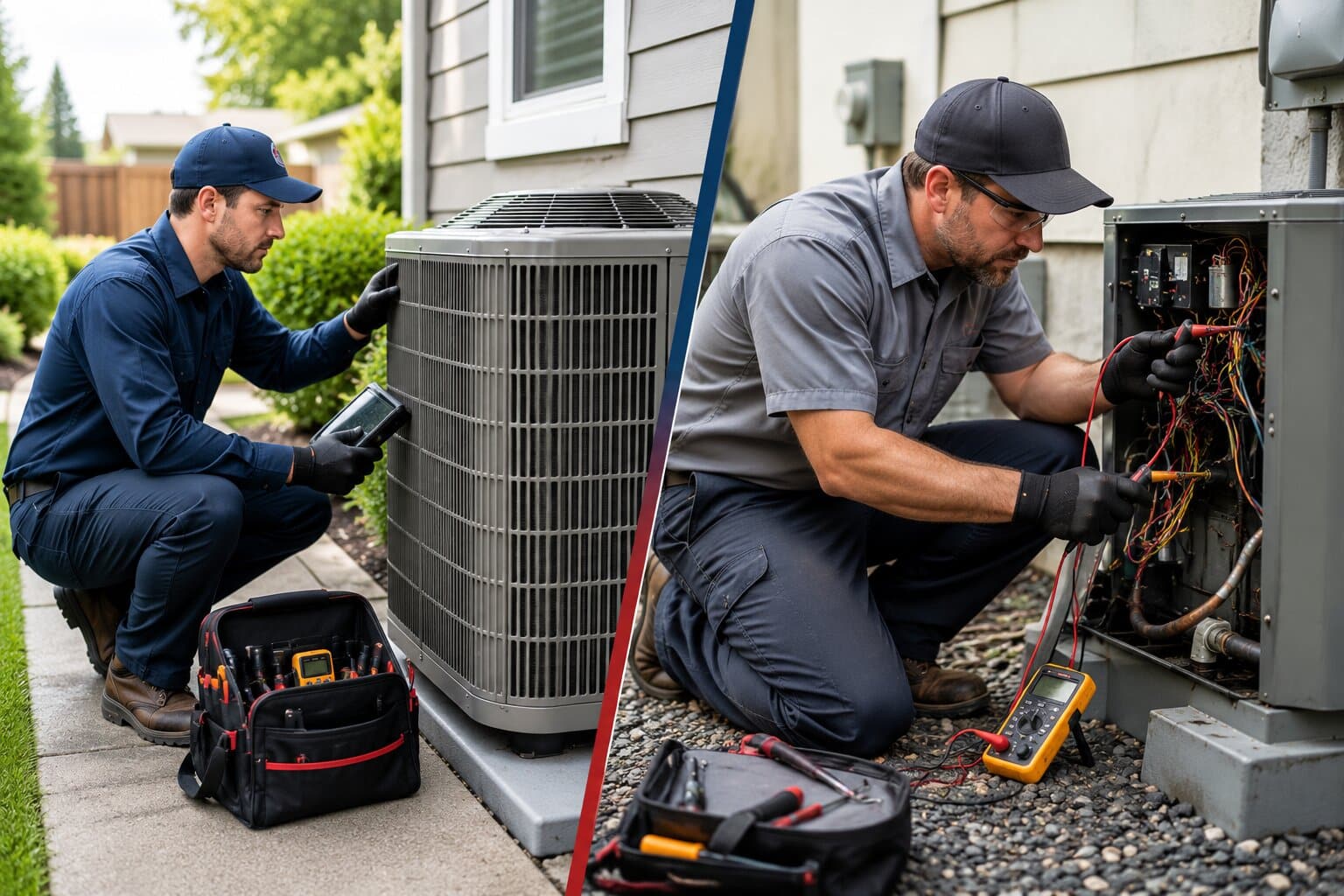
No. An air conditioner tune up and AC repair serve different purposes. A tune-up is preventive cooling maintenance intended to inspect the system, check its operation, and identify developing concerns. AC repair, on the other hand, addresses a known or suspected problem that is affecting how the equipment operates.
| AC Maintenance / Tune Up | AC Repair |
| Preventive service | Corrective service |
| Inspects system condition | Diagnoses an existing problem |
| Checks components and operation | Repairs or replaces faulty components |
| Looks for developing concerns | Addresses a specific malfunction |
AC Maintenance Is Preventive
Routine maintenance typically includes inspecting applicable components, checking airflow, evaluating system operation, and identifying conditions that may require attention. It is performed even when the AC appears to be working normally.
AC Repair Addresses an Existing Problem
Repair becomes appropriate when an air conditioner is showing symptoms such as poor cooling, unusual noises, frequent cycling, or other abnormal behaviour. A professional diagnosis helps determine the underlying cause rather than treating the symptom alone.
Maintenance and repair are complementary. Regular maintenance can help identify developing concerns, while repair is needed when an actual fault requires correction.
When Should You Call an HVAC Professional?
Homeowners can handle basic upkeep, but some AC concerns require professional assessment. Calling an HVAC professional at the right time can help identify the cause of a problem and determine whether the system needs routine maintenance, repair, or a broader evaluation.
Before the Cooling Season
Spring is a practical time to schedule professional AC maintenance, particularly if the system has been unused for several months. Having the equipment inspected before regular cooling begins gives you an opportunity to address concerns before you rely on the AC more heavily.
When Cooling Performance Changes
Arrange professional service if you notice:
- Poor or uneven cooling
- Reduced airflow
- Unusual noises or odours
- Frequent cycling
- Persistent moisture around the equipment
- Difficulty reaching the thermostat setting
These symptoms can have different causes, so professional diagnosis is important.
When the System Is Older or Frequently Needs Repairs
An older air conditioner or one requiring repeated repairs may benefit from a broader assessment of its overall condition. Maintenance can address routine needs, but recurring faults may raise questions about reliability and whether continued repairs remain practical.
Repeated repairs do not automatically mean an AC needs replacement. An HVAC professional should consider the system’s condition, repair history, reliability, and operating performance before recommending replacement.
AC Maintenance Checklist for Homeowners
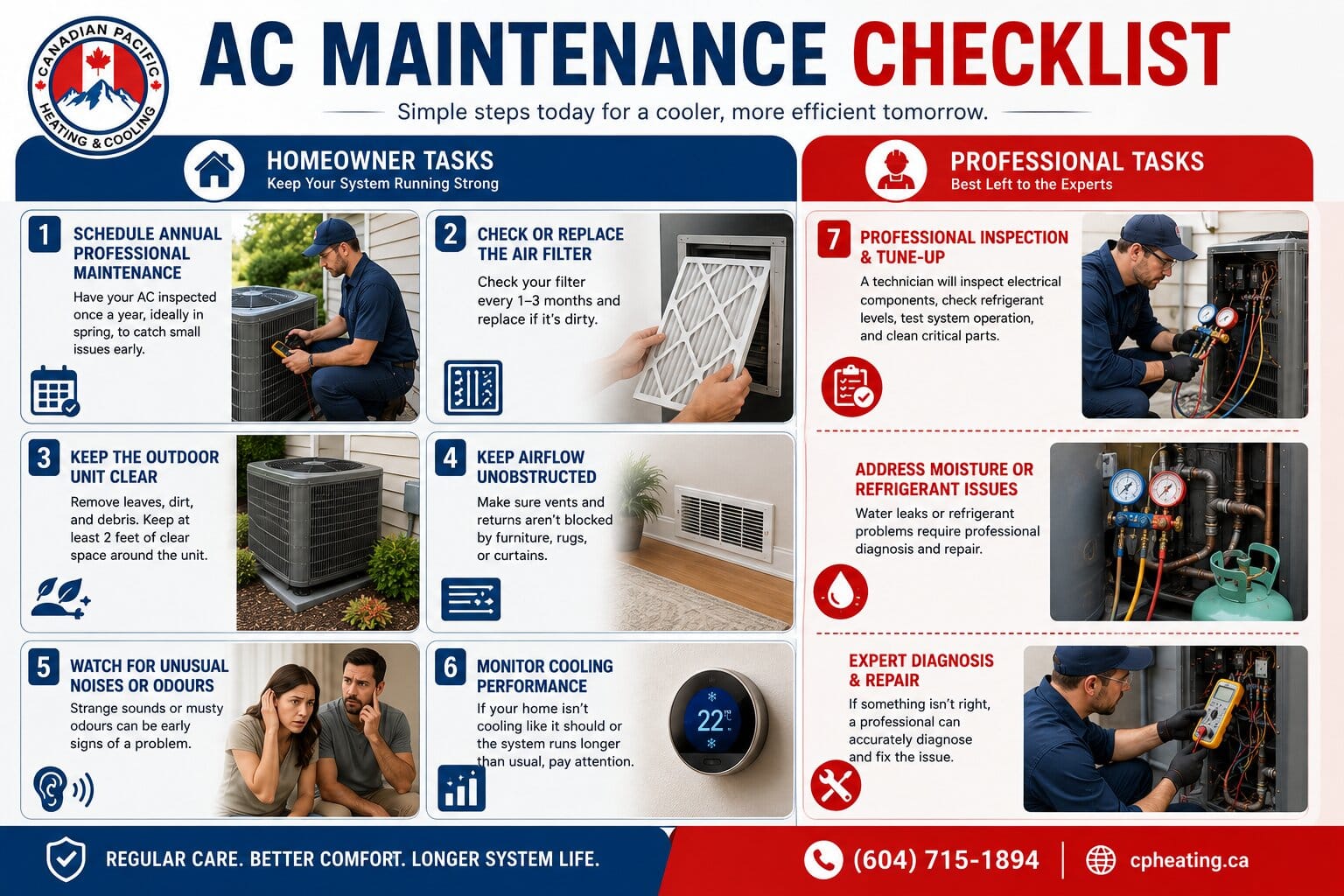
Regular homeowner upkeep can complement professional AC maintenance and help you spot changes in your cooling system before they become more disruptive. Use this checklist throughout the cooling season:
- Schedule professional maintenance annually: Have your AC inspected before the main cooling season.
- Check the air filter regularly: Clean or replace it according to the filter and equipment manufacturer’s instructions.
- Keep the outdoor unit clear: Remove leaves, grass, and other debris from around the condenser while avoiding damage to the fins.
- Keep airflow unobstructed: Make sure supply vents and return-air openings are not blocked by furniture or other household items.
- Watch for unusual noises or odours: New or persistent sounds and smells can indicate a developing problem.
- Monitor cooling performance: Pay attention to weak airflow, uneven cooling, longer cycles, or difficulty reaching the thermostat setting.
- Have unusual moisture investigated: Persistent water or suspected refrigerant concerns should be assessed by an HVAC professional rather than handled yourself.
These simple checks don’t replace professional cooling maintenance, but they can help keep your system easier to monitor and ensure potential problems receive attention sooner.
Conclusion: Keep Your AC Ready for the Cooling Season
For many residential air conditioners, professional maintenance once a year is a sensible baseline, particularly before the main cooling season. Regular service can help assess system performance, identify developing concerns, and keep essential components operating properly. Homeowners can also support their system by checking the air filter, keeping the outdoor unit clear of debris, and watching for changes in cooling performance.
Don’t wait for a complete breakdown if your AC starts making unusual noises, cycling frequently, producing weak airflow, or struggling to cool your home. These symptoms may indicate a repair rather than routine maintenance. Similarly, an older system with recurring problems may benefit from a professional evaluation to determine whether continued repairs or replacement makes more sense.
If your Burnaby home needs reliable air conditioning service, Canadian Pacific Heating & Cooling can assess your system and help determine the right next step.