When your furnace suddenly stops working, especially during a cold, wet Burnaby winter, knowing what to do first can help protect your household, prevent further damage, and get your heating system back on track. A furnace breakdown does not always mean you need a major repair, but it is important to recognise when a problem requires immediate attention.
Before attempting to restart your furnace, check for signs of danger, including a gas odour, smoke, or a carbon monoxide alarm. If you suspect a gas leak or carbon monoxide exposure, leave the property immediately and contact the appropriate emergency service from a safe location.
If there are no warning signs, you may be able to check a few basic things, such as your thermostat settings, electrical supply, and air filter. However, persistent heating failure, repeated shutdowns, or unusual operating symptoms should be assessed by a qualified HVAC professional.
In this guide, Canadian Pacific Heating & Cooling explains what to do during a furnace emergency, which checks are safe for homeowners, when to call a technician, and how to reduce the risk of another unexpected heating failure.
What Should You Do First During a Furnace Emergency?
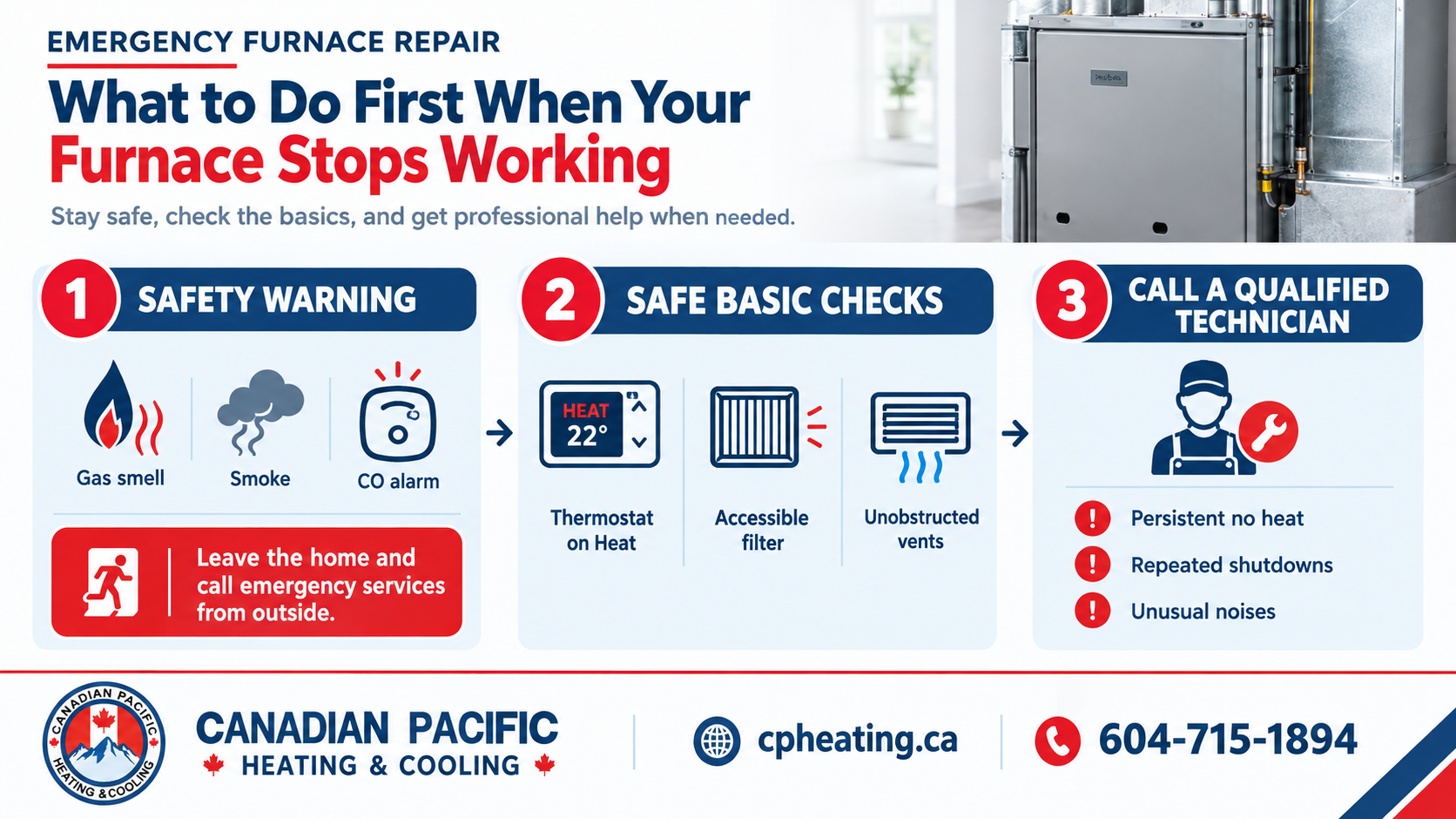
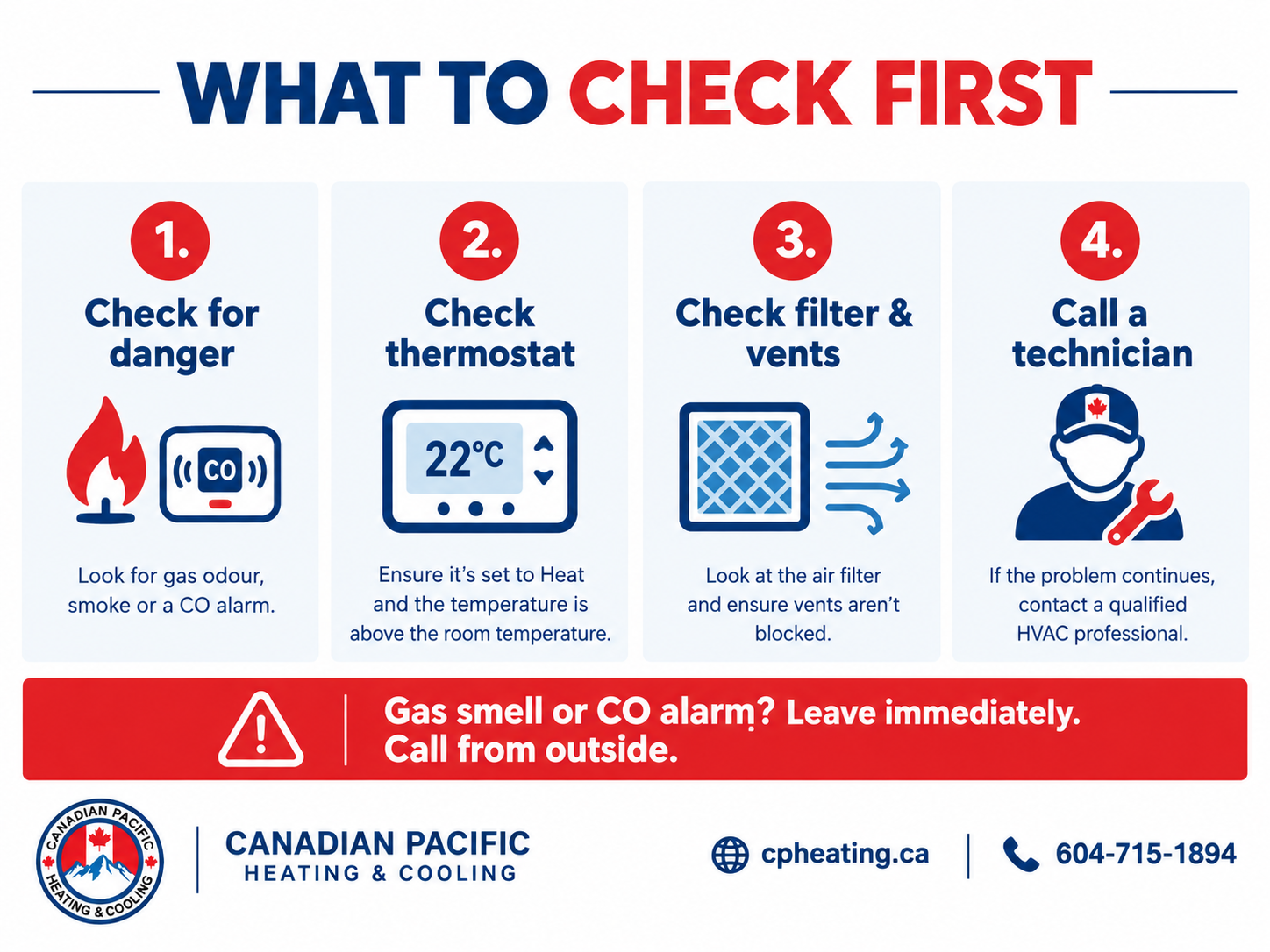
If your furnace stops working, follow these steps in order:
- Check for immediate danger. If you smell gas, hear a carbon monoxide alarm, see smoke, or suspect a fire, prioritise evacuation and emergency assistance.
- Observe the symptoms. If it is safe to remain in the home, note whether the furnace is completely off, running without producing heat, or repeatedly switching on and off.
- Check basic settings. Confirm the thermostat is set to heating mode and that the temperature setting is above the current room temperature.
- Check accessible components. If safe, inspect the air filter and look for an obvious power interruption. Do not open the furnace cabinet or attempt internal repairs.
- Contact an HVAC professional if the problem continues. Describe the symptoms and any warning indicators rather than repeatedly trying to restart the equipment.
These steps can help you respond calmly without turning a manageable furnace malfunction into a more serious situation.
Check for a Gas Leak or Carbon Monoxide Warning
Safety comes before troubleshooting.
Natural gas is commonly given a distinctive rotten-egg odour to help people recognise a possible leak. If you smell gas, leave the building immediately. Do not operate light switches, use electrical equipment, light matches, or create other possible ignition sources. Once outside, contact FortisBC’s gas emergency line at 1-800-663-9911 or call 911. Do not re-enter until the appropriate authorities say it is safe.
Carbon monoxide presents a different danger because it is colourless and odourless. If your carbon monoxide alarm sounds, evacuate everyone from the home and move to fresh air. Call 911 or the appropriate emergency service from outside, and do not return until authorities confirm that it is safe.
Do not attempt to identify the source of a suspected gas leak or carbon monoxide problem by inspecting the furnace yourself.
Determine Whether the Furnace Has Completely Stopped
If there are no signs of an immediate safety emergency, observe what the system is doing.
For example:
- The thermostat is blank and the furnace does not respond.
- The furnace starts but blows cool air.
- The system runs briefly and then shuts down.
- The furnace makes an unusual noise during startup.
- The thermostat displays an error or warning code.
These observations can help a technician narrow down the possible causes. They do not establish a diagnosis on their own, because similar symptoms can arise from different components or operating conditions.
If you notice smoke, persistent burning odours, loud or abnormal combustion noises, or another concerning symptom, stop troubleshooting and seek professional assistance.
Safe Furnace Troubleshooting Homeowners Can Try
Once you have ruled out immediate warning signs, a few simple checks may help you identify why your heating system is not working. These checks are not a substitute for professional diagnosis, but they can sometimes reveal a straightforward issue.
Check Your Thermostat Settings
Your thermostat tells the heating system when to operate. Incorrect settings, depleted batteries, or a communication problem can sometimes prevent the furnace from starting.
Check that:
- The thermostat is set to Heat, not Cool or Off.
- The target temperature is higher than the current room temperature.
- The display is working and any required batteries are in good condition.
- No error message or warning indicator is displayed.
If the thermostat appears to be working correctly but the furnace does not respond, avoid opening the thermostat or attempting electrical repairs. A technician can investigate whether the problem lies with the thermostat, wiring, controls, or furnace itself.
Check the Furnace’s Electrical Supply
Some furnace problems result from an interruption to the electrical supply. If it is safe, check whether the furnace’s dedicated breaker appears to have tripped.
If a breaker has tripped repeatedly, do not keep resetting it. Repeated trips may indicate an electrical fault that needs professional attention.
Never remove the furnace’s access panels to inspect wiring, touch exposed electrical components, or restore power to equipment that has been declared unsafe.
Inspect the Air Filter
A dirty furnace filter can restrict airflow, making it harder for the system to circulate heated air. In some circumstances, restricted airflow can contribute to overheating and an automatic shutdown.
If your filter is accessible without opening a sealed equipment compartment, check it against the manufacturer’s replacement guidance. Replace it with the correct size and type if necessary.
However, a clean filter will not resolve every heating failure. If the furnace still does not operate normally, arrange a professional inspection rather than assuming the filter was the only problem.
Check Vents and Record Any Error Codes
Make sure accessible supply and return air vents are not blocked by furniture, curtains, or household items. If the thermostat or furnace displays an error code, record it for the technician.
Do not remove sealed panels, dismantle burners, adjust gas valves, or bypass safety controls to investigate the problem.
Important: If the furnace repeatedly shuts down, makes unusual noises, or displays a warning associated with unsafe operation, stop troubleshooting and seek qualified assistance.
Common Signs Your Furnace Needs Emergency Repair
Recognising the symptoms of a heating failure can help you decide whether to arrange a routine appointment or seek more urgent professional attention.
Not every malfunction presents an immediate danger, but some symptoms should never be ignored.
The Furnace Will Not Turn On or Produce Heat
If your furnace will not start, possible causes include a thermostat problem, power interruption, ignition fault, or control-system issue.
If the system runs but produces no warm air, the cause may be different. Depending on the equipment, the problem could involve the heating cycle, airflow, controls, or another component.
Start with the safe checks described above. If the furnace remains inoperative, contact an HVAC technician to diagnose the problem.
A prolonged loss of heating deserves particular attention during cold weather, especially if young children, older adults, or people with health vulnerabilities are in the home.
The Furnace Keeps Turning On and Off
Repeated starting and stopping is often called short cycling. It can occur when a furnace cannot complete its normal operating cycle.
Possible contributing factors include restricted airflow, overheating, thermostat issues, or control faults.
Short cycling can interfere with comfort and may place additional demands on system components. Repeatedly restarting the furnace without understanding the cause is not a reliable solution.
Make a note of when the cycling occurs and whether the system displays an error code. This information may help the technician narrow down the cause.
Your Furnace Makes Unusual Noises
A furnace may produce ordinary operating sounds as its blower and other components run. However, sudden or unusual noises deserve attention.
Examples include:
- Loud banging or booming when the furnace starts.
- Persistent rattling or grinding.
- New squealing or scraping sounds.
- Unusual noises accompanied by repeated shutdowns or poor heating.
The meaning of a sound depends on the equipment and the circumstances. For example, a loose panel and a mechanical fault can produce different types of rattling, while a loud boom during ignition requires particular caution.
If the noise is severe, associated with abnormal combustion, or accompanied by smoke or a concerning smell, stop using the system and seek appropriate assistance. Evacuate and call 911 if there is an immediate fire or other life-safety threat.
You Notice a Burning Smell
A brief dusty smell when heating is first used after a period of inactivity can have a different cause from a persistent burning or electrical odour. However, it is important not to assume that an unusual smell is harmless.
If you notice smoke, a strong or persistent burning smell, or an odour accompanied by abnormal furnace operation, stop troubleshooting and seek professional advice. If there are signs of fire or an immediate threat, leave the building and call 911.
If you smell rotten eggs or suspect a natural gas leak, leave immediately and call FortisBC‘s emergency line or 911 from outside.
Your Carbon Monoxide Alarm Sounds
Carbon monoxide can be produced by fuel-burning appliances, including gas furnaces. It has no colour or smell, so you cannot determine whether it is present by looking around the room or smelling the air.
If your carbon monoxide alarm sounds:
- Get everyone out of the home immediately.
- Move to fresh air.
- Call 911 or the appropriate emergency service from outside.
- Do not re-enter until authorities confirm it is safe.
Do not try to locate the source yourself or restart the furnace. Health Canada’s carbon monoxide safety guidance provides further information on preventing exposure and responding to an alarm.
What Causes a Sudden Furnace Failure?
Understanding the possible causes of a furnace breakdown can help you explain the problem to a technician. It is important to remember that the same symptom can have several causes, and an accurate diagnosis may require testing.
Ignition or Flame-Sensing Problems
Many residential gas furnaces use an ignition system to start combustion and a flame-sensing component to confirm that a flame is present.
If the ignition sequence fails or the system does not detect the expected flame, the furnace may stop the heating cycle as a safety measure.
These faults can prevent the furnace from producing heat even when the thermostat is calling for warmth.
Because gas appliances involve combustion and safety controls, homeowners should not attempt to dismantle ignition components, adjust gas pressure, or bypass a flame-sensing device. A qualified technician can inspect the system and determine the appropriate repair.
Restricted Airflow and Overheating
A furnace needs adequate airflow to transfer heat and distribute warm air through the home.
A heavily clogged filter, obstructed return vent, or mechanical airflow problem may reduce that circulation. Depending on the equipment and conditions, restricted airflow can contribute to overheating and trigger a protective shutdown.
Checking an accessible filter and making sure vents are unobstructed are reasonable first steps when it is safe to do so.
If the furnace continues to overheat or shut down, the underlying cause needs to be identified. Simply replacing the filter may not address a blower, control, or other mechanical problem.
Electrical or Control-System Faults
A furnace relies on electrical components to coordinate its operating sequence. Depending on the system, these may include the thermostat connection, sensors, control board, blower motor, and safety switches.
A problem in one component can prevent the system from starting, interrupt heating, or cause repeated shutdowns.
Homeowners can record visible error messages and note the circumstances in which the fault occurs. Internal electrical testing and component replacement should be handled by an appropriately qualified professional.
Age, Wear, and Deferred Maintenance
Mechanical and electrical components can wear over time. A furnace that has experienced recurring faults or has not received appropriate maintenance may need closer inspection.
Routine maintenance can help identify certain developing issues and keep components operating as intended, but it cannot prevent every breakdown.
If your furnace is older or has required several repairs, ask the technician to assess its overall condition as well as the immediate fault. That information can help you decide whether another repair is sensible or whether replacement deserves consideration.
What Should You Do While Waiting for Furnace Repair?
If your furnace cannot be restored safely, focus on keeping everyone comfortable and reducing the risks associated with a cold home.
Keep Occupants Warm and Reduce Heat Loss
Close exterior doors and windows, draw curtains where appropriate, and gather household members in a warmer room if that helps retain heat.
Pay particular attention to infants, older adults, and anyone who may be more vulnerable to cold temperatures.
If the home becomes uncomfortably cold and professional assistance is delayed, consider staying with family or relocating to another suitable, heated location.
Do not assume that the home will remain safe indefinitely without heating. The risk depends on outdoor conditions, the building’s insulation, indoor temperature, and how long the outage continues.
Avoid Unsafe Temporary Heating Methods
A portable electric space heater may provide temporary warmth if it is used according to the manufacturer’s instructions.
Keep it on a stable surface, away from curtains, bedding, furniture, and other combustible materials. Do not leave it unattended, and keep children and pets at a safe distance.
Never use an oven, barbecue, camping stove, or outdoor fuel-burning appliance to heat an indoor space. These devices can create serious fire and carbon monoxide hazards.
Never operate a fuel-powered generator inside a home, garage, or other enclosed space.
Reduce the Risk of Frozen Pipes
During prolonged heating outages, water pipes in cold areas of a home may become vulnerable to freezing. This can be a concern in exterior walls, crawlspaces, garages, and poorly insulated areas.
Monitor the indoor temperature and seek plumbing advice if the home is becoming very cold or you suspect a pipe may be freezing. If a pipe bursts or water begins leaking, take appropriate steps to protect the property and contact a qualified plumber.
The best response depends on the home’s layout, plumbing system, and weather conditions. Do not rely on one temporary measure to guarantee that pipes will remain unfrozen.
When Should You Call an Emergency Furnace Repair Technician in Burnaby?
If safe, basic checks do not resolve the heating failure, contact a qualified HVAC professional. The need for urgent attention depends on the symptoms, the weather, the occupants, and whether the equipment can operate safely.
For Burnaby homeowners, arranging prompt help can be particularly important during extended cold spells or when a home has vulnerable occupants.
Situations That Require Prompt Professional Assessment
Contact an HVAC technician when:
- The furnace remains off despite safe checks of the thermostat and power supply.
- The system runs but cannot provide adequate heat.
- The furnace repeatedly shuts down or trips a safety control.
- Unusual noises or persistent odours occur during operation.
- A fault code appears and the system cannot operate normally.
- You suspect a mechanical or electrical problem that requires internal inspection.
A suspected gas leak or carbon monoxide incident is different from an ordinary HVAC service call. Follow the emergency procedures described earlier rather than waiting for a furnace technician to arrive.
What Information Should You Give the Technician?
When contacting Canadian Pacific Heating & Cooling or another appropriate service provider, provide as much relevant information as you can safely gather.
Useful details include:
- Your location in Burnaby or the surrounding service area.
- The furnace’s make, model, and approximate age, if known.
- Whether the furnace is completely off, running without heat, or cycling repeatedly.
- Any error code displayed by the system.
- Unusual noises, smells, or other symptoms noticed before the failure.
- Whether the problem began after a power interruption or recent maintenance.
You do not need to diagnose the fault yourself. Clear observations can help the service provider understand the problem and determine what information is needed before arranging a visit.
What Happens During a Professional Furnace Diagnosis?
The technician will assess the symptoms and inspect the components relevant to the particular furnace and fault.
Depending on the system, this may involve checking the thermostat, electrical supply, airflow, ignition sequence, control system, safety devices, or combustion and venting components.
The exact procedure depends on the equipment and the findings. A responsible diagnosis should distinguish between the immediate fault and any additional issues that may affect safe operation or reliability.
Before approving non-emergency repairs, ask the technician to explain:
- What has been identified as the problem.
- Which repair is recommended and why.
- The expected cost, including applicable diagnostic and after-hours charges.
- Whether parts are required and what the expected timing is.
- Whether the repair affects any applicable warranty.
For gas appliances, make sure the work is performed by a professional with the qualifications and authorizations required in British Columbia.
Emergency Furnace Repair or Furnace Replacement: Which Is Better?
A sudden furnace failure does not automatically mean the entire system needs to be replaced. The right decision depends on the fault, the condition of the equipment, the repair estimate, and the homeowner’s longer-term needs.
When Furnace Repair May Be the Right Choice
Repair may be reasonable when the fault is clearly identified, the required work is practical, and the rest of the system is in satisfactory condition.
For example, a repair involving a replaceable component may be more sensible than replacing an otherwise reliable furnace. The decision should be based on the actual diagnosis and estimate, rather than the assumption that every breakdown requires a major investment.
When Furnace Replacement May Be Worth Considering
Replacement may deserve consideration when a furnace experiences recurring failures, needs expensive repairs, or is approaching the end of its useful service life.
A professional assessment can help compare the cost of the proposed repair with the expected reliability, remaining lifespan, and operating costs of the existing system.
It may also be an opportunity to consider a more efficient furnace or an alternative heating system, such as a heat pump, if appropriate for the home.
Do not make a replacement decision based on age alone. Ask for an explanation of the system’s condition and the available options before committing to a major expense.
How Burnaby Homeowners Can Reduce the Risk of Another Heating Emergency
Although no maintenance routine can prevent every breakdown, proactive care can help identify some developing issues before they result in a complete loss of heating.
Schedule Routine Furnace Maintenance
Follow the manufacturer’s furnace maintenance recommendations and arrange periodic professional servicing appropriate to your equipment.
Maintenance may include inspecting relevant operating and safety components, checking airflow, reviewing system performance, and identifying signs of wear.
For gas appliances, FortisBC recommends regular maintenance by a licensed contractor. Its gas safety guidance provides further information on appliance care and gas safety.
Between professional visits, check accessible air filters as recommended by the manufacturer and replace them when needed. A filter that is appropriate for one furnace may not be suitable for another, so follow the equipment specifications.
Pay Attention to Early Warning Signs
Do not ignore recurring symptoms simply because the furnace eventually starts working again.
Changes worth investigating include:
- Repeated short cycling.
- Uneven heating between rooms.
- New rattling, grinding, or squealing noises.
- Repeated fault codes or unexpected shutdowns.
- Persistent unusual odours.
- A noticeable decline in heating performance.
These signs do not necessarily indicate a serious fault, but early professional assessment may prevent a minor issue from developing into a more disruptive problem.
Maintain Working Carbon Monoxide Alarms
If your home has fuel-burning heating equipment, carbon monoxide safety should be part of your regular household maintenance.
Install and maintain certified carbon monoxide alarms in accordance with applicable requirements and the manufacturer’s instructions. Test and replace them as directed.
If an alarm sounds, evacuate immediately and call emergency services. Never assume an alarm is faulty simply because you cannot smell anything unusual.
Understand Your Home’s Heating System
Burnaby homes may use gas furnaces, electric heating, heat pumps, or hybrid systems. Each has different operating characteristics and maintenance requirements.
Knowing which system you have, where its user-accessible filter is located, and how to read basic thermostat messages can help you communicate effectively when something goes wrong.
Keep your equipment information and service records accessible. This can help a technician understand the system’s history and provide more informed recommendations.
Conclusion: Get Help With Furnace Problems Before They Get Worse
A furnace breakdown can be stressful, particularly when temperatures drop and your household depends on reliable heating. The most important step is to check for immediate danger before attempting any troubleshooting.
If the situation is safe, basic checks of your thermostat, power supply, and accessible air filter may help identify a simple issue. However, repeated shutdowns, persistent loss of heat, unusual operating symptoms, and suspected mechanical faults should be assessed by a qualified HVAC professional.
For Burnaby homeowners, routine maintenance and attention to early warning signs can help reduce the risk of unexpected heating interruptions. While no system is immune to breakdowns, knowing how to respond can help protect your household and avoid unsafe repair attempts.